Have you ever texted someone and gotten a quick “IDC” back, then wondered what it really meant? You are not alone. This short abbreviation shows up everywhere, from group chats to social media comments.
Most of the time, it simply means “I Don’t Care.” People use it when they have no strong opinion or when they want to keep things simple and quick.But IDC can carry more weight than it seems at first glance.
Sometimes it truly means someone has no preference. Other times, it might hide frustration, hurt, or a desire to end a conversation. This guide walks through every common meaning behind IDC, so you can read the tone correctly and know exactly how to respond.
IDC Meaning in Text
IDC is one of the most common texting abbreviations you’ll come across. It shows up in almost every type of chat, from casual texts to social media comments. Understanding its real meaning takes more than just knowing the letters.
This guide breaks down everything about IDC, including its tone, context, and how to use it properly.
Quick Answer: What Does IDC Mean?
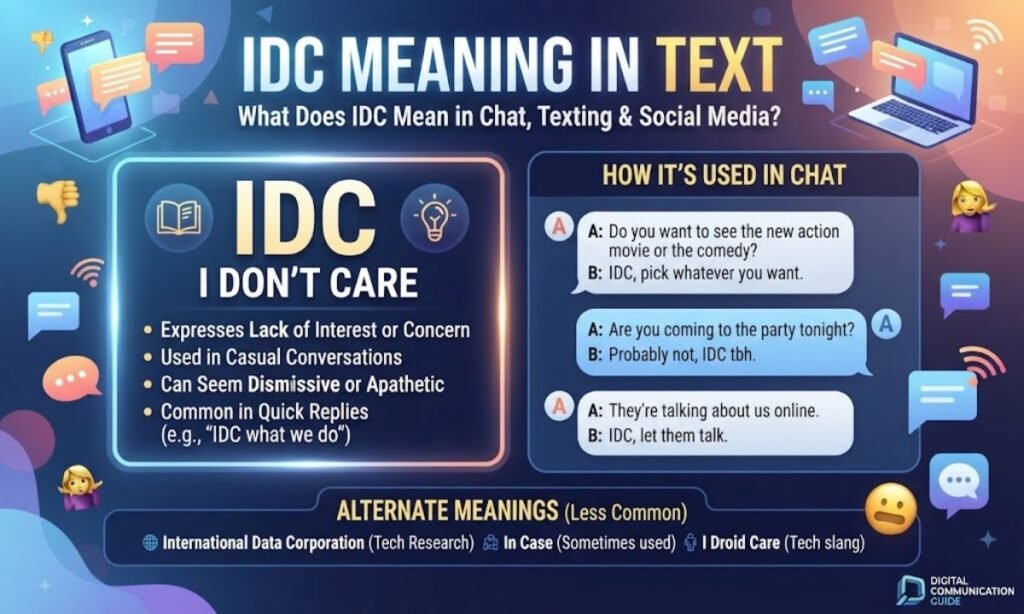
IDC stands for “I Don’t Care.” People use it to show they have no strong opinion about something. It can sound neutral, blunt, or even a bit dismissive depending on the situation.
The tone behind IDC depends heavily on context, punctuation, and the conversation leading up to it.
What Does IDC Stand For?
IDC simply stands for “I Don’t Care.” It’s a short way to express indifference without typing a full sentence. People use it when they genuinely have no preference or when they want to sound unbothered by something.
This abbreviation became popular because texting favors quick, simple responses. Typing three letters feels faster than typing out a full phrase every time.
What Does IDC Mean in a Text Message?
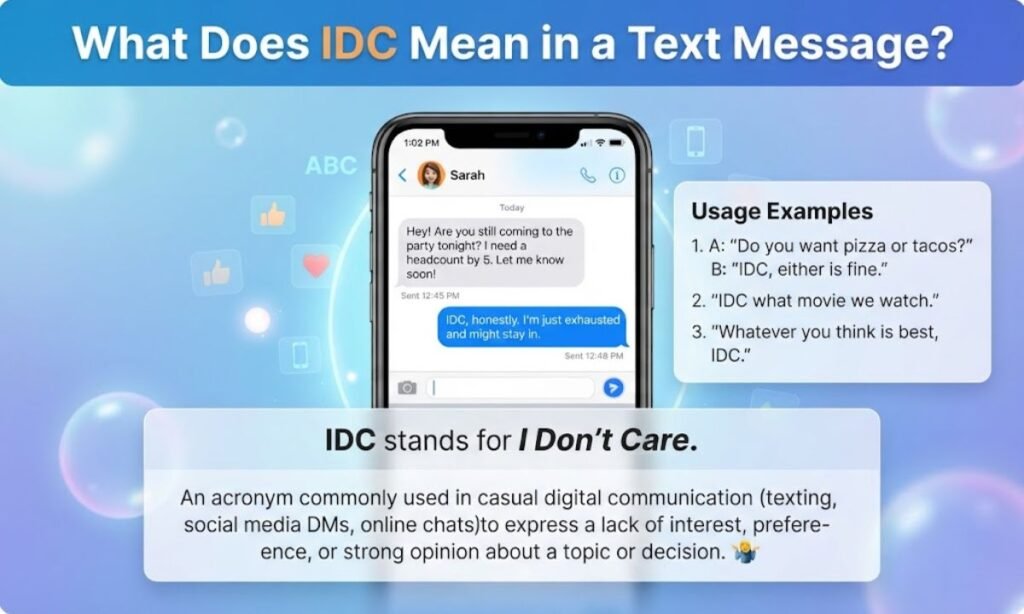
In a text, IDC usually shows that someone has no strong feelings about a topic. It might appear when choosing between two options or reacting to news that doesn’t affect them much.
However, the same three letters can carry different emotional weight. Sometimes it’s relaxed and easygoing. Other times, it feels cold or distant, especially during a disagreement.
Idc meaning in text pakistan
In Pakistan, IDC is used the same way as in most English speaking regions. It often blends into Roman Urdu texting, especially among younger users who mix English slang into casual chats.
IDC meaning medical
In medical contexts, IDC stands for something completely different. It usually refers to “Indwelling Catheter” or “Invasive Ductal Carcinoma,” depending on the field. This meaning has nothing to do with texting slang.
Why Do People Use IDC?
People type IDC for several different reasons. The intention behind it often depends on their mood and the topic being discussed.
They have no preference
Sometimes it’s simple. The person genuinely doesn’t mind either option.
They are not interested
Other times, they use it to show a lack of interest in the topic altogether.
They are annoyed
IDC can also reflect frustration, especially during a tense conversation.
They want to end the conversation
It sometimes signals that someone wants to stop discussing a certain topic.
They are trying to appear unbothered
In emotional situations, people may use IDC to mask how they truly feel.
Is IDC Rude?
IDC isn’t always rude, but it can come across that way depending on tone and context. The same phrase can feel harmless in one chat and dismissive in another.
Friendly or harmless use
“Where should we eat? IDC, you pick!”
Slightly blunt use
“IDC what you think, I’m doing it my way.”
Clearly dismissive use
“IDC anymore, do whatever you want.”
Does IDC Mean Someone Truly Doesn’t Care?
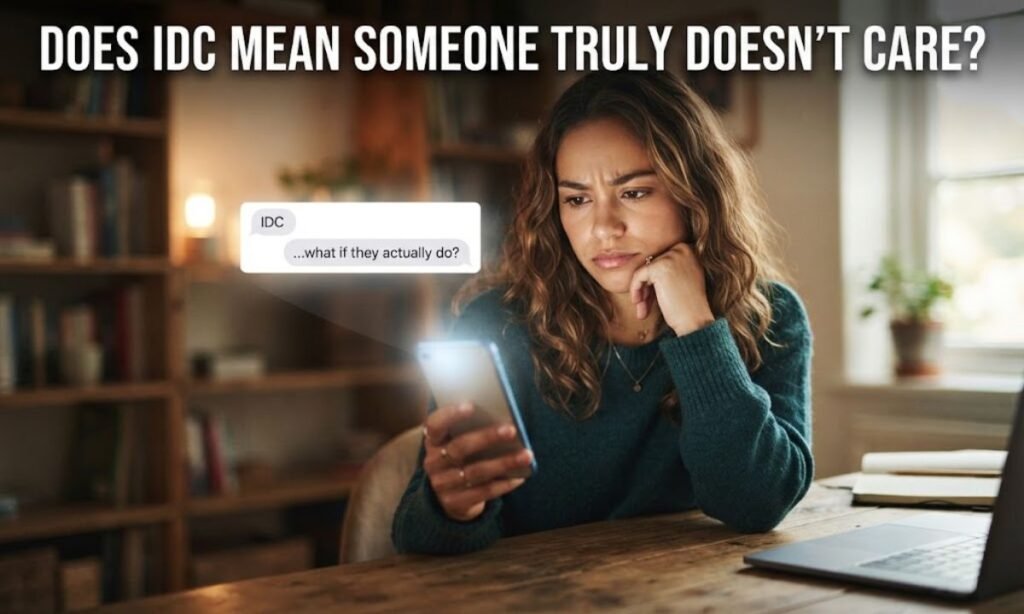
Not always. Sometimes people say IDC even when they do care, especially during emotional conversations. It can act as a defense mechanism to avoid showing vulnerability.
Context and prior messages usually reveal the truth behind the phrase. A calm IDC feels very different from one sent during an argument.
IDC Meaning in Different Contexts
The meaning of IDC shifts depending on where and how it’s used.
IDC in Casual Texting
Usually reflects genuine indifference about small choices.
IDC in an Argument
Often shows frustration or an attempt to shut down the conversation.
IDC Between Friends
Typically lighthearted, often used when picking plans or activities.
IDC in a Relationship
Can signal emotional distance or frustration if used repeatedly during serious talks.
IDC on Social Media
IDC appears across nearly every platform, often with slightly different vibes depending on the app.
IDC on Instagram
Common in comments or captions, often showing a relaxed, carefree attitude.
IDC on Snapchat
Used in quick chats, usually reflecting indifference about plans or opinions.
IDC on TikTok
Frequently seen in comment sections, often paired with humor or sarcasm.
IDC on WhatsApp
Common in group chats when deciding plans or reacting to updates.
IDC on Discord
Used casually in gaming or community servers to show lack of preference.
IDC on Facebook
Appears in comments, often reflecting a laid-back or dismissive tone.
IDC in Gaming
Shows up when players don’t mind losing or don’t care about the outcome of a match.
IDC on Dating Apps
Can signal a relaxed attitude about plans, though it may also show disinterest.
IDC Meaning in Professional Messages
IDC should be avoided in professional communication. It feels too casual and can come across as unprofessional or dismissive in a work setting.
IDC vs I Don’t Mind
Both phrases sound similar, but they carry different tones.
| Phrase | Tone | Example |
| IDC | Neutral or blunt | “IDC where we go.” |
| I Don’t Mind | Polite, warmer | “I don’t mind where we go.” |
IDC vs IDK
These two are often confused but mean very different things.
| Term | Meaning |
| IDC | I Don’t Care |
| IDK | I Don’t Know |
IDC vs Whatever
IDC
Shows indifference without necessarily sounding annoyed.
Whatever
Often feels more dismissive or frustrated, especially in arguments.
IDC vs IDGAF
IDGAF is a stronger, more intense version of IDC. It carries a much bolder, sometimes aggressive tone compared to the simpler IDC.
IDC vs I Couldn’t Care Less
“I couldn’t care less” is a stronger, more emphatic version of IDC. It clearly shows complete indifference, often with a sharper edge.
Common Examples of IDC in Text
Example 1: No preference
“Pizza or burgers tonight?” “IDC, both sound good.”
Example 2: Choosing a movie
“Which movie should we watch?” “IDC, you pick this time.”
Example 3: Showing disinterest
“Did you hear about the new update?” “IDC honestly.”
Example 4: Ending an argument
“Fine, IDC anymore, let’s just drop it.”
Example 5: A defensive response
“You always do this.” “IDC what you think.”
How to Reply When Someone Says IDC
If they mean “I don’t mind”
Simply move forward with a decision, since they’re giving you freedom to choose.
If they sound annoyed
Give them space or gently ask what’s bothering them.
If they sound hurt
Approach softly and ask if something deeper is going on.
If you think they are being rude
Address it calmly instead of reacting with the same tone.
If you want to keep things playful
Respond with humor to keep the conversation light.
How to Use IDC Without Sounding Rude
Add a bit more context or a friendly tone to soften the phrase.
- “IDC, honestly either works for me!”
- “IDC, whatever makes you happy.”
- “IDC, just let me know what’s easiest.”
When Should You Avoid Using IDC?
Skip IDC in serious, professional, or emotionally sensitive conversations. It can come across as careless when someone needs genuine support or a thoughtful reply.
Is IDC Flirty?
By itself, IDC isn’t flirty. It’s neutral and mostly reflects indifference. However, paired with playful teasing or emojis, it can take on a lighter, more personal tone.
Is IDC Offensive?
IDC isn’t inherently offensive, but it can feel hurtful if used carelessly during emotional or important conversations. Tone and timing matter a lot here.
Common Mistakes People Make With IDC
Mistake 1: Assuming it always means anger
Sometimes it simply reflects a calm lack of preference.
Mistake 2: Assuming the person truly feels nothing
Some people hide real emotions behind a casual IDC.
Mistake 3: Using it in formal communication
It feels out of place in professional or academic writing.
Mistake 4: Ignoring the topic
The meaning shifts depending on what’s being discussed, so context always matters.
Mistake 5: Treating every short reply as rude
Not every quick response signals frustration or disinterest.
What Does IDC Mean With a Period?
IDC
Neutral and casual, without extra emotional weight.
IDC.
Feels more final or blunt, often signaling mild frustration.
IDC!!!
Shows stronger emotion, often frustration or emphasis.
idc lol
Softens the phrase, making it feel more playful and lighthearted.
What Does “IDCC” Mean?
IDCC usually means “I Don’t Care, Continue” or acts as an emphasized version of IDC, often typed quickly without much thought.
What Does “IDC Fr” Mean?
This means “I Don’t Care, For Real.” It emphasizes genuine indifference, often used to strongly confirm a lack of preference.
What Does “IDC Tbh” Mean?
This translates to “I Don’t Care, To Be Honest.” It adds a layer of honesty to the statement, making the indifference feel more sincere.
Related Texting Abbreviations
- IDK – I Don’t Know
- IDGAF – I Don’t Give A F
- TBH – To Be Honest
- NGL – Not Gonna Lie
- SMH – Shaking My Head
Final Thoughts
IDC might look like a simple three letter abbreviation, but it carries a surprising amount of emotional range. It can reflect genuine indifference, mild frustration, or even a defense mechanism during tough conversations. Understanding the context around IDC helps you read the real meaning behind it, rather than taking it at face value every time.
Whether you spot it on Snapchat, WhatsApp, or during a casual text exchange, remember that tone and timing shape its true message. Once you learn to notice these small details, like punctuation or the topic being discussed, you’ll never misread an IDC text again. This tiny phrase proves that even short, simple words can hold a lot of meaning in our everyday digital conversations.
Frequently Asked Questions
What does IDC mean in text?
IDC stands for “I Don’t Care,” used to show indifference or a lack of strong preference.
Is IDC always rude?
No, IDC isn’t always rude. Its tone depends on context, punctuation, and the conversation itself.
What’s the difference between IDC and IDK?
IDC means “I Don’t Care,” while IDK means “I Don’t Know.” They express very different ideas.
Does IDC mean someone doesn’t care at all?
Not always. Sometimes people use IDC to hide real emotions, especially during arguments.
Can IDC be used in a professional message?
No, IDC is too casual for professional or formal communication and should be avoided there.
Is IDC the same as IDGAF?
No, IDGAF is a stronger, more intense version of IDC and carries a bolder tone.
How should I reply to someone who says IDC?
Respond based on their tone, either moving forward calmly or gently checking in if they seem upset.

Muhammad Shoaib is a content creator and SEO professional who enjoys making language and vocabulary easy to understand. He writes helpful content about word meanings, phrases, slang, abbreviations, spelling differences, and everyday expressions. nThrough WhizzMean, Shoaib focuses on creating clear, simple, and practical explanations that help readers quickly understand confusing words and language-related questions.