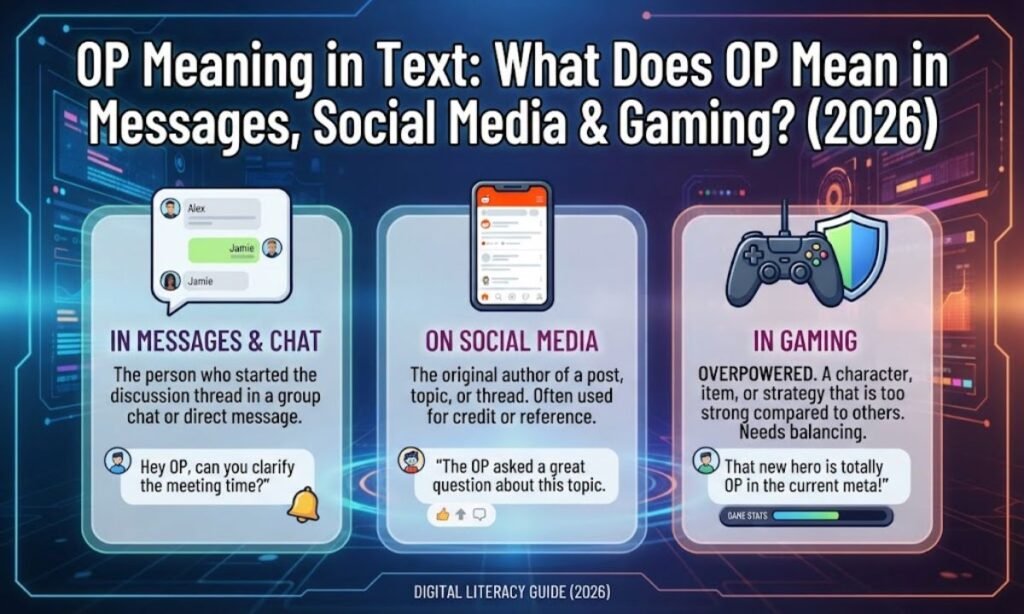
Have you ever seen someone type “OP” in a comment or gaming chat and felt unsure what it meant? You are not alone. This short abbreviation shows up all over forums, social media, and gaming communities. Most of the time, it means one of two things. It could point to the “Original Poster” who started a discussion, or it could describe something “Overpowered” in a game.
The tricky part is figuring out which meaning fits, since both are common but used in very different situations. A comment section usually points to Original Poster, while a gaming chat usually means Overpowered. This guide breaks down both meanings clearly, so you always know exactly how to read OP the next time you see it.
Quick Answer Box
OP has two main meanings depending on where you see it. In forums and social media, OP usually means “Original Poster,” the person who started a thread or post. In gaming, OP often means “Overpowered,” describing something too strong compared to everything else.
Context always decides which meaning fits the message you’re reading.
What Does OP Mean in Text?
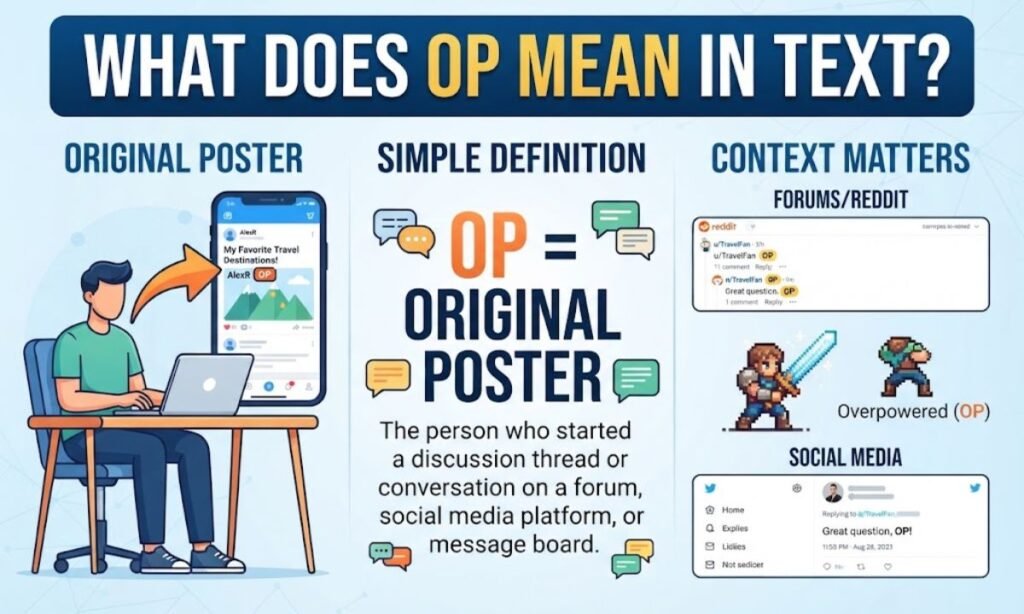
OP is a short abbreviation with two very different uses. It’s one of those rare terms where meaning completely shifts based on the platform and topic being discussed.
Understanding both meanings helps you avoid confusion, especially since forums and gaming chats often overlap online.
OP Meaning as Original Poster
In forums, comment sections, and group chats, OP usually refers to whoever created the original post or started the discussion. It helps people reference the original message without repeating the person’s username every time.
Example
“OP never replied after posting this, weird.”
This shows someone referring back to the person who originally shared the topic.
OP Meaning as Overpowered
In gaming, OP describes something extremely strong, often unfairly so. It could refer to a character, weapon, move, or strategy that dominates the game compared to other options.
Example
“That new weapon is so OP, it needs a nerf.”
Here, OP shows frustration about something feeling too powerful within the game.
Where Is OP Commonly Used?
OP appears across many platforms, though its meaning depends heavily on context.
Mostly used to reference “Original Poster” throughout comment threads.
Discord
Can mean either “Original Poster” in chat threads or “Overpowered” in gaming discussions.
Rarely used, but occasionally appears when referencing an earlier message sender.
Sometimes used in comment sections to refer to the original caption writer.
TikTok
Common in comments, usually referring to the person who posted the video.
Occasionally used in group discussions to reference the original post creator.
OP Meaning in Gaming
Gaming communities use OP constantly, almost always meaning “Overpowered.” It’s one of the most recognized gaming abbreviations across multiple platforms.
Gaming Example
“This character is way too OP after the last update.”
This reflects how balance changes can make certain characters feel unfairly strong.
OP Meaning on Social Media
On most social platforms, OP typically refers to “Original Poster.” It’s used to clarify who started a conversation, especially in busy comment sections with multiple replies.
How to Know Which Meaning Is Correct
Context almost always reveals the correct meaning of OP. Certain clues can help you figure it out quickly.
- Forums and comments usually mean Original Poster
- Gaming chats usually mean Overpowered
- Discussions about balance or strength suggest gaming context
- References to posts or threads suggest forum context
Conversation Examples
Example 1
“OP deleted their account after all the backlash.”
This clearly refers to the original poster of a discussion.
Example 2
“That combo is so OP, nobody can counter it.”
Here, OP describes something overpowered within a game.
Example 3
“Does anyone know if OP ever responded to the comments?”
This example again points to the original poster of a post or thread.
Example 4
“They nerfed the gun because it was too OP.”
This reflects gaming balance changes due to overpowered mechanics.
Why People Use OP
People use OP because it saves time and keeps conversations efficient. Instead of repeating usernames or long explanations, OP quickly communicates the intended meaning within context.
- It simplifies forum discussions
- It quickly describes game balance issues
- It fits naturally into fast typing culture
- It’s widely recognized across gaming and social platforms
When Should You Use OP?
Use OP when referring to a post’s original author or when discussing something unusually strong in a game.
- In forum or comment discussions
- When describing gaming balance
- When referencing an earlier post without repeating details
When Should You Avoid Using OP?
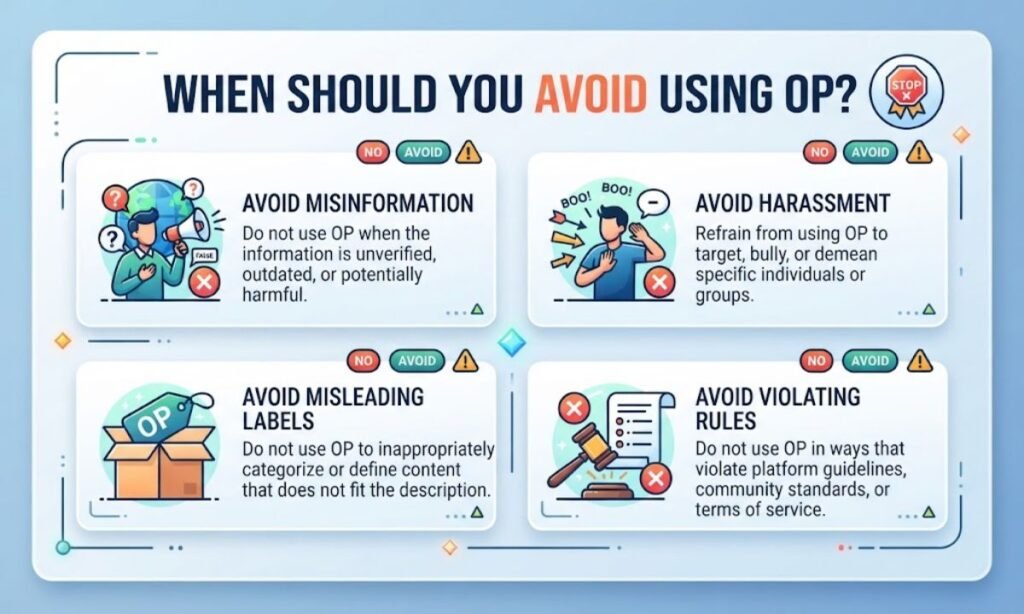
Avoid OP in formal writing or when the audience might not understand gaming or forum slang.
- Skip it in professional emails
- Avoid it in unrelated everyday conversations
- Don’t use it without context, since it can confuse readers
Is OP Rude?
No, OP isn’t rude by itself. It’s simply a neutral term used for clarity. However, depending on how it’s used in a sentence, the surrounding words could carry a rude or critical tone.
Common Mistakes About OP
Some people assume OP only has one meaning, leading to confusion when switching between gaming chats and forums. Others use it without context, making it harder for readers to understand which meaning applies.
Another mistake is using OP in professional settings, where the abbreviation feels out of place and unclear to those unfamiliar with internet slang.
OP vs Other Internet Slang
Comparing OP with similar abbreviations shows how differently these terms function.
| Term | Meaning | Common Use |
| OP | Original Poster / Overpowered | Forums and gaming |
| TBH | To Be Honest | Sharing opinions |
| NGL | Not Gonna Lie | Honest reactions |
| IMO | In My Opinion | Casual opinions |
Related Abbreviations
- TBH – To Be Honest
- NGL – Not Gonna Lie
- IMO – In My Opinion
- IDK – I Don’t Know
- SMH – Shaking My Head
Final Thoughts
OP stands out as one of the few internet abbreviations with two completely different, widely recognized meanings. Whether it refers to the “Original Poster” of a discussion or describes something “Overpowered” in a game, context always makes the true meaning clear. Understanding both definitions helps you navigate forums, social media, and gaming chats without confusion.
Once you get comfortable spotting the difference, using and understanding OP becomes second nature. This simple two letter term shows how online language adapts across different communities, proving that even short abbreviations can carry real meaning depending on where and how they’re used.
Frequently Asked Questions
What does OP mean in text?
OP usually means “Original Poster” on forums and social media, or “Overpowered” in gaming contexts.
How do I know which meaning of OP is correct?
Check the context. Forums and comments usually mean Original Poster, while gaming chats usually mean Overpowered.
Is OP the same on every platform?
No, its meaning shifts depending on whether the conversation is about a post or a game.
Is OP rude to say about someone?
No, OP is a neutral term and isn’t rude unless paired with negative or critical language.
Can OP mean something else besides these two definitions?
Rarely, but in most everyday contexts, it stays limited to Original Poster or Overpowered.
Is OP commonly used in professional messages?
No, OP is casual internet slang and should be avoided in formal or professional writing.
What does it mean when someone calls a game character OP?
It means the character feels unfairly strong compared to others, often requiring balance changes.

Muhammad Shoaib is a content creator and SEO professional who enjoys making language and vocabulary easy to understand. He writes helpful content about word meanings, phrases, slang, abbreviations, spelling differences, and everyday expressions. nThrough WhizzMean, Shoaib focuses on creating clear, simple, and practical explanations that help readers quickly understand confusing words and language-related questions.