
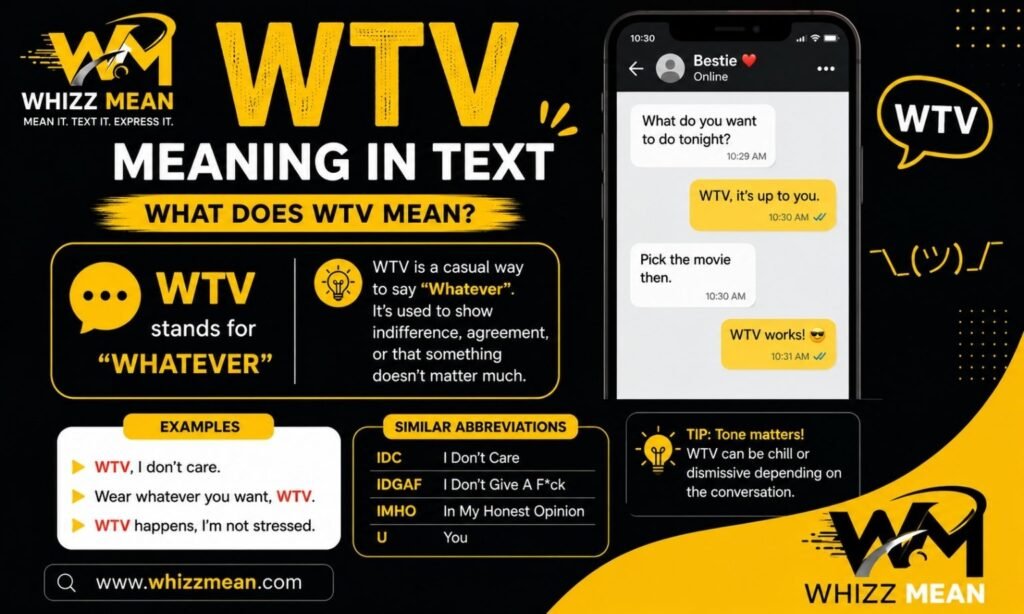
Ever gotten a text that just says “wtv” and wondered if the other person is annoyed, bored, or just typing fast? You are not alone. The WTV meaning in text trips up a lot of people because it looks like a typo, sounds like slang, and can carry a totally different tone depending on who sends it.
Part of the confusion comes from how casually this abbreviation gets tossed into conversations. One friend uses it to mean “sure, I don’t mind,” while another fires it off mid-argument to sound dismissive. Without any tone of voice or facial expression to guide you, the same three letters can read as chill or cold, and that gap is exactly where misunderstandings happen.
Getting the WTV meaning in text right matters more than people think. Misreading it can turn a relaxed reply into a perceived insult, or make you miss a genuine sign that someone is upset. This guide breaks down every angle of the term so you never have to second guess it again.
WTV Meaning in Text: Quick Answer 🚀
📌 WTV is short for “whatever.” It is a quick, informal way to show agreement, indifference, or mild dismissiveness in a text message, and its tone depends heavily on context.
Quick takeaway: If it's followed by a casual emoji, it usually means "no big deal." If it stands alone with no punctuation, it often signals irritation.
Primary Meanings and Full Forms of WTV
The WTV meaning in text is not complicated on the surface, but it carries a few shades of meaning depending on how it’s used. Here are the core definitions people rely on:
- Whatever (most common): the literal, full form of WTV, used to express agreement, indifference, or that something doesn’t matter to the sender.
- Whatever works: a shortened way of saying you’re flexible with a plan, time, or option someone else suggested.
- Whatever you want: sometimes used when someone is letting the other person decide without any preference of their own.
- Whatever, then: a slightly clipped, more dismissive variant, often used to end a disagreement without continuing it.
Key takeaway: In almost every case, the WTV meaning in text boils down to "whatever," but the emotional weight behind it changes with punctuation, emojis, and the conversation's context.
Origin and History of WTV in Online Slang
The word “whatever” has been used as a dismissive or indifferent response in spoken English for decades, especially popularized by 1990s pop culture and teen movies. As texting and instant messaging grew in the early 2000s, users naturally started shortening frequently typed words to save time and characters.
WTV emerged as part of that early texting shorthand era, alongside classics like brb, ttyl, and idk. It became especially common on AOL Instant Messenger (AIM) and early SMS platforms where character limits and slow typing on flip phones encouraged abbreviations.
As smartphones and social apps took over, the WTV meaning in text carried forward unchanged. It never really evolved into new definitions the way some slang does. Instead, it just spread across new platforms while keeping its original, simple meaning intact.
How to Use WTV in Daily Chats (With Examples)?
Using WTV naturally comes down to matching it with the right tone and situation. It works best in casual, low-stakes exchanges between friends, siblings, or people you text regularly.
Here are some realistic examples of how the WTV meaning in text plays out in real conversations:
Example 1 (Agreeable tone):
Friend: “Pizza or burgers tonight?”
You: “wtv you want, I’m easy 😊”
Example 2 (Indifferent tone):
Friend: “The movie got pushed to 9pm, that okay?”
You: “wtv works for me”
Example 3 (Slightly annoyed tone):
Friend: “I can’t make it anymore, sorry.”
You: “wtv, it’s fine.”
Example 4 (Neutral, flexible tone):
Coworker: “Should we meet on Zoom or in person?”
You: “wtv is easier for you”
Notice how the same word shifts meaning based on the sentence around it. That flexibility is exactly why the WTV meaning in text depends so heavily on context clues.
Popular Platforms Where WTV Is Commonly Used
The WTV meaning in text shows up across nearly every messaging and social platform, though it feels most natural in fast, casual environments.
- WhatsApp: extremely common in group chats and quick one-on-one replies.
- Instagram DMs: used often in comment replies and direct message threads between friends.
- Snapchat: fits the platform’s fast, informal texting culture perfectly.
- TikTok comments: used to respond casually to opinions or debates in the comment section.
- Reddit: appears in casual replies, though less frequently than on chat apps.
- SMS/iMessage: still one of the most common places to see plain “wtv” texts, especially between close contacts.
Key takeaway: The more casual and personal the platform, the more likely you are to see the WTV meaning in text used naturally and often.
Other Meanings of WTV in Different Contexts
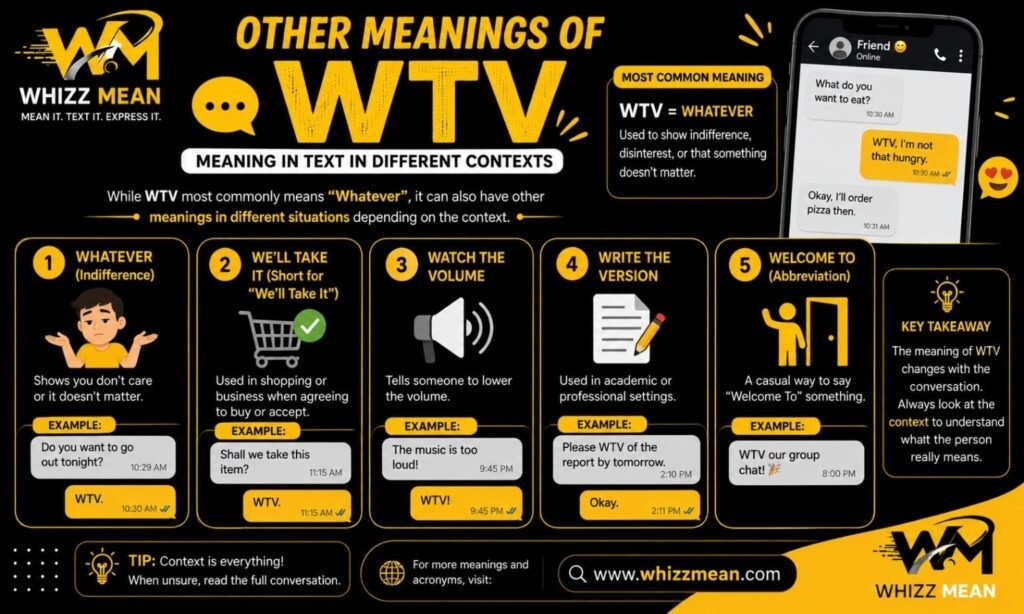
Outside of everyday texting, WTV can pop up with completely different meanings depending on the industry or context. It’s worth knowing these so you don’t misread a message.
- Watch TV: occasionally used as shorthand for “watch TV,” especially in scheduling texts like “wtv tonight?”
- Wireless Test Vehicle: a technical term used in some engineering and telecom fields, unrelated to texting slang.
- Weight to Volume: seen in some scientific, cooking, or pharmaceutical measurement contexts.
- Username or handle: some usernames or brand names simply use “wtv” as a stylistic choice with no deeper meaning.
These alternate meanings are far less common in everyday chats, but they explain why a quick Google search for WTV meaning in text sometimes brings up unrelated technical results.
WTV vs Similar Texting Abbreviations
Comparing the WTV meaning in text with similar slang helps clarify when to use which term. Here’s a side-by-side breakdown:
| Abbreviation | Full Meaning | Tone | Best Use Case |
| WTV | Whatever | Neutral to dismissive | Showing indifference or flexibility |
| IDK | I don’t know | Neutral, uncertain | Responding when you’re genuinely unsure |
| IDC | I don’t care | More dismissive | Stronger indifference than WTV |
| NVM | Never mind | Dropping a topic | Ending a conversation thread quickly |
| K | Okay | Short, sometimes cold | Quick acknowledgment |
Key takeaway: WTV sits in the middle of the tone spectrum. It's more casual than "IDK" but softer than "IDC," which makes it one of the most flexible dismissive terms in texting.
How to Respond When Someone Texts You WTV?
Getting a plain “wtv” can feel confusing, especially if you’re not sure whether the person is annoyed or just relaxed. The best move is to read the surrounding context before reacting.
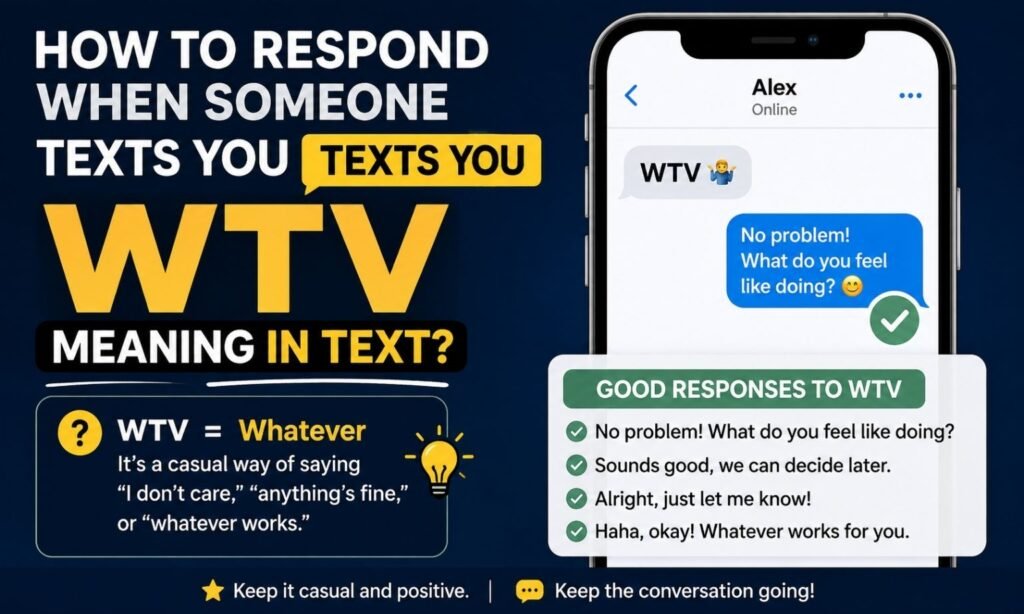
Here’s how to respond depending on the situation:
- If it seems casual: reply normally, like “wtv works, let’s just decide when we get there 👍”
- If it seems slightly cold: gently check in, like “you good? feels like something’s up”
- If it follows an argument: give space or clarify calmly, like “I don’t want this to feel unresolved, can we talk?”
- If it’s about plans: treat it as flexibility, like “cool, I’ll pick the place then”
Pro tip: When in doubt, ask directly. A simple "haha wtv as in you're fine, or wtv as in annoyed?" clears up the WTV meaning in text instantly without overthinking it.
When and Where You Should Avoid Using WTV
Despite how common it is in casual chats, the WTV meaning in text has clear limits on where it belongs. Using it in the wrong setting can come across as careless or even rude.
Avoid using WTV in these situations:
- Professional emails or work Slack messages, where it reads as dismissive or unprofessional.
- Formal texts to teachers, bosses, or clients, since it undermines a respectful tone.
- Serious or emotional conversations, where it can feel like you’re brushing off someone’s feelings.
- First-time conversations with new contacts, where the abbreviation might not land the way you intend.
Key takeaway: Save WTV for people who already understand your texting style. In anything formal, spell out "whatever" or rephrase entirely.
Pro Tip I Learned
Before hitting send on a short reply like “wtv,” try reading it out loud in the exact tone you’d use if you said it face to face. If it sounds cold or short-tempered out loud, add a small softener like an emoji or a follow-up sentence. This single habit has saved me from a dozen unnecessary misunderstandings over text.
Common Mistakes to Avoid When Using WTV
A few small missteps can completely change how your message lands. Here are the most common ones people make with the WTV meaning in text:
- Using it in formal writing, like emails, resumes, or professional documents.
- Sending it without context during a serious or emotional conversation, which can feel dismissive.
- Assuming the receiver knows your tone, when in reality text has no vocal cues to soften the word.
- Overusing it in every response, which can make you seem generally uninterested in the conversation.
- Capitalizing it aggressively (WTV in all caps) mid-sentence, which often reads as shouting or frustration.
Key takeaway: Context and tone markers like emojis or follow-up sentences matter just as much as the word itself.
Frequently Asked Questions
What does WTV mean in a text message?
WTV stands for “whatever.” It’s used to express agreement, flexibility, or mild indifference depending on the tone of the conversation.
Is WTV rude to say in a text?
Not inherently. The WTV meaning in text is neutral by default, but it can sound rude or dismissive if sent without any softening tone, especially during arguments.
What’s the difference between WTV and IDC?
WTV (“whatever”) is more neutral and flexible, while IDC (“I don’t care”) carries a stronger, more dismissive tone. WTV is generally the gentler option of the two.
Can WTV mean something other than “whatever”?
Yes. In some contexts, WTV can stand for “watch TV” or be used as technical shorthand in fields like telecom or engineering, though these meanings are far less common in everyday texting.
Conclusion
At its core, the WTV meaning in text is simple: it’s just a fast way of typing “whatever.” But as this guide shows, the real meaning behind those three letters depends entirely on tone, context, and the relationship between the people texting.
Whether you’re using it to show you’re flexible with plans or trying to figure out if a friend is upset, paying attention to the details around the word makes all the difference. Once you understand the full range of the WTV meaning in text, you’ll never have to guess what someone really meant again.

Muhammad Shoaib is a content creator and SEO professional who enjoys making language and vocabulary easy to understand. He writes helpful content about word meanings, phrases, slang, abbreviations, spelling differences, and everyday expressions. nThrough WhizzMean, Shoaib focuses on creating clear, simple, and practical explanations that help readers quickly understand confusing words and language-related questions.




4 thoughts on “WTV Meaning in Text: What It Stands for & How to Use It”