Have you seen “LFG” in a chat and wondered what it means? It shows up in texts, sports posts, and game lobbies. The same three letters can mean different things.Most often, LFG means “let’s f***ing go.” It is a burst of excitement and energy.
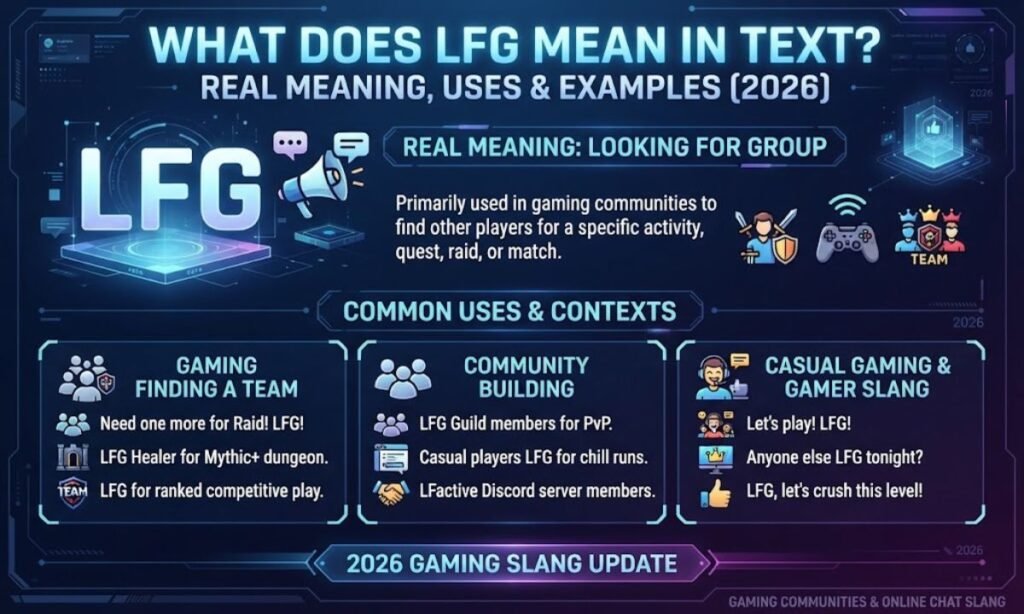
In gaming, it can also mean “looking for group.” Context tells you which one fits.This guide explains both meanings in simple words. You will see real chat examples, tone tips, and smart reply ideas. Read on and understand LFG with ease.
LFG Meaning: Quick Meaning
LFG has two main meanings. Context tells you which one is in play. In everyday chats and social media, it is a burst of excitement. In online games, it is a request to join a team.
The hype meaning is the one most people see in 2026. It works like a cheer. You can use it for wins, plans, goals, or good news.
Simple Definition
LFG = “let’s f*ing go”** (excitement, motivation, celebration)
LFG = “looking for group” (a gaming request to find teammates)
| Meaning | Where You See It | Feeling |
| Let’s f***ing go | Texts, social media, sports | Excited, pumped |
| Looking for group | Gaming chats and lobbies | Practical, team seeking |
Examples
- “I got the job! LFG!!!”
- “Match starts in ten minutes. LFG!”
- “LFG, need two more players for ranked.”
- “Gym day. LFG.”
Origin & Background
LFG began in online gaming. Players needed a fast way to find teammates in games with group content. A short tag saved time in crowded chat channels.
Later, the hype meaning grew in sports, music, and social media. Fans shouted “let’s go” to cheer a team. Adding a strong word made it feel more intense, and the shorthand LFG spread fast.
Today both meanings live side by side. A gamer may post “LFG for raid.” A friend may text “LFG, we won!” Same letters, different job.
The Gaming Origin
In multiplayer games, players use LFG as a tool. It means “looking for group.” You post it to find teammates for missions, raids, or matches. Many games even have an LFG tab or channel.
The Motivational Slang Origin
The hype version comes from spoken slang and sports culture. It mixes “let’s go” with extra energy. Athletes, creators, and fans helped push it into everyday chat.
| Stage | What Happened |
| Early online gaming | LFG used to find teammates |
| Sports and fan culture | “Let’s go” chants grew stronger |
| Social media era | LFG became a hype tag |
| Today | Both meanings are common |
Real-Life Conversations
Examples make the meaning clear. Notice how the same word shifts with the topic.
WhatsApp Conversation
Friend: We got tickets to the concert!
You: LFG!!! Best news of the week.
This is pure excitement. The triple exclamation marks show it.
Instagram DM
Friend: I finally ran my first 5K.
You: LFG! So proud of you.
Here, LFG works as congratulations and support.
TikTok Comments
Comment: Just hit 10K followers today.
Reply: LFG 🔥🔥
In comments, LFG is a quick cheer. Emojis add extra energy.
Text Message
Teammate: Need one more for ranked tonight.
You: I’m in. LFG.
This is the gaming style. It signals you are ready to play.
Emotional & Psychological Meaning
LFG carries strong positive energy. It tells the other person, “I’m with you, and I’m hyped.” That makes people feel backed and celebrated.
It can also be self motivation. People type “LFG” before a workout, exam, or big meeting. It works like a mental push.
In team spaces, LFG builds unity. Shouting it together creates a sense of shared effort. That is why you hear it in locker rooms and group chats.
Watch for these mood clues:
- Exclamation marks: More marks mean more energy.
- Emojis: Fire, flex, and party emojis boost the hype.
- Caps lock: All caps feels loud and excited.
- Topic: News, wins, and plans signal celebration.
Usage in Different Contexts
The tone shifts by place. A phrase that fits a game chat may not fit a work email.
Social Media
On social media, LFG is a fast cheer. People use it for wins, launches, birthdays, and goals. It fits short captions and comments.
Friends & Relationships
Friends use it to hype each other. It shows support for new jobs, trips, or personal goals. In couples, it can be playful and encouraging.
Gaming Communities
Gamers use LFG as a request. It means “I need a team.” Posts often add details like game mode, rank, or time.
Work and Professional Settings
Use caution at work. The full phrase includes a swear word, so it may seem unprofessional. In a casual team chat it may be fine, but skip it with clients and managers.
Casual vs Serious Tone
| Situation | Is LFG Okay? | Better Option |
| Celebrating with a friend | Yes | “LFG!” |
| Finding teammates in a game | Yes | “LFG for ranked” |
| Client email | No | “Great news, congratulations” |
| Message to a manager | No | “Excited to get started” |
| Sad or serious news | No | A caring, clear message |
Common Misunderstandings
People can misread short slang. These are the most common mistakes.
Assuming It Always Means Excitement
In games, LFG may just be a request for teammates. It is not always about hype. Look at the topic first.
Using It in Formal Situations
LFG is slang. Keep it out of resumes, school work, and official emails. It fits casual spaces only.
Misreading Context
A sports fan and a gamer may use the same letters for different reasons. Check the chat before you reply.
Using It With Sensitive News
Never cheer “LFG” over bad news. It can feel careless or rude. Use gentle words instead.
Comparison Table
LFG is one of many hype terms. They differ in strength and style.
| Term | Meaning | Energy Level | Best Use |
| LFG | Let’s f***ing go | Very high | Big wins and hype |
| Let’s go | Let’s go | High | General cheering |
| W | Win | Medium | Quick praise |
| Hype | Excited | Medium | Casual excitement |
| Pog | Play of the game | High | Gaming and streaming |
| Lets gooo | Extended cheer | High | Friendly hype |
Key Insight
LFG sits near the top of the energy scale. It is stronger than “let’s go” but still friendly in most chats. The tone is bold, so use it with people who share your vibe.
Variations and Types of LFG
People change LFG to match their mood. Here are common forms.
1. LFG
The base form. It shows excitement or a team request.
2. LET’S GO
The clean version. It works in more settings and sounds less harsh.
3. BIG LFG
Adds extra weight. It marks a major win or big news.
4. LFGGG
Extra letters stretch the cheer. It feels loud and fun.
5. LFG!!!
Exclamation marks boost the energy. It is common in group chats.
6. LFG Team
Used to rally a group. It suits sports teams and work crews in casual spaces.
7. Weekend LFG
A cheer for weekend plans. It signals fun is coming.
8. Fitness LFG
Used before a workout or after a personal best. It fuels motivation.
9. Sports LFG
Fans use it when their team scores or wins. It is a cheer from the stands.
10. Gaming LFG
The practical form. It means “looking for group” and starts a team search.
| Form | Likely Use |
| LFG | General hype or team search |
| LFGGG | Extra excitement |
| BIG LFG | Major win |
| Fitness LFG | Gym motivation |
| Sports LFG | Fan cheer |
| Gaming LFG | Find teammates |
How to Respond When Someone Uses It
First, decide which meaning fits. Then match the mood.
Casual Replies
- “LFG indeed!”
- “Yes! So happy for you.”
- “Let’s do it.”
Funny Replies
- “LFG? I’m already in my victory dance 😄”
- “Somebody call the confetti.”
- “Okay, hype levels are off the charts.”
Mature and Confident Replies
- “Congratulations. You earned this.”
- “That’s great news. Well done.”
- “Proud of you.”
Private and Respectful Replies
If the news is personal, keep it warm and calm.
- “That means a lot to hear.”
- “Thank you for sharing this with me.”
- “Let’s celebrate in person.”
For gaming requests, reply with details: “I’m in, 8 PM, any rank.”
Regional & Cultural Usage
Slang travels fast, but comfort levels differ by place. The meaning stays similar around the world.
Western Culture
In the US, UK, and Canada, LFG is common in sports, gaming, and fitness. It is seen as bold and energetic. Young people use it freely.
Asian Culture
In many Asian countries, gamers use LFG just as a team call. The hype meaning is growing through social media. People may avoid it with elders because of the strong word.
Middle Eastern Culture
Young gamers and creators use LFG in mixed Arabic and English chats. The hype meaning appears among peers. Because of the swear word, many people use “let’s go” in public spaces.
Global Internet Usage
Online, LFG is shared slang. Gamers, athletes, and creators use it across borders. Context helps avoid confusion between the two meanings.
| Region | Common Use | Tone |
| Western countries | Sports, gym, social media | Bold and energetic |
| Asia | Gaming and fan spaces | Casual, careful with elders |
| Middle East | Peer chats, gaming | Friendly, cautious in public |
| Global online | Games, creators, fans | Hype and teamwork |
Frequently Asked Questions
What does LFG mean in text?
LFG usually means “let’s f***ing go.” It shows excitement or motivation.
What does LFG mean in gaming?
In gaming, LFG means “looking for group.” Players use it to find teammates.
Is LFG rude?
It can sound strong because of the swear word. Among friends it is usually fine.
Can I use LFG at work?
It is best to avoid it. Use “great job” or “let’s do this” instead.
Is LFG the same as “let’s go”?
They are close. LFG is stronger and more intense.
What does LFGGG mean?
It is LFG with extra letters. It shows louder excitement.
How do I reply to LFG?
Match the mood. Cheer back, celebrate, or ask for details if it is a gaming call.
Final Thoughts
LFG is a short phrase with big energy. It can celebrate a win, push you through a hard day, or help you find a team in a game. Reading the context is the key to understanding which meaning is in play.
Use LFG with care. It shines in friend chats, sports talk, and gaming spaces. In formal or sensitive situations, choose gentle and clear words. A good message always matches the mood of the moment.

Muhammad Shoaib is a content creator and SEO professional who enjoys making language and vocabulary easy to understand. He writes helpful content about word meanings, phrases, slang, abbreviations, spelling differences, and everyday expressions. nThrough WhizzMean, Shoaib focuses on creating clear, simple, and practical explanations that help readers quickly understand confusing words and language-related questions.