
Have you ever seen “BPM” on a song, a fitness watch, or a work document and wondered what it means? In most cases, BPM stands for “beats per minute.” It tells you how many beats happen in one minute. The higher the number, the faster the pace.
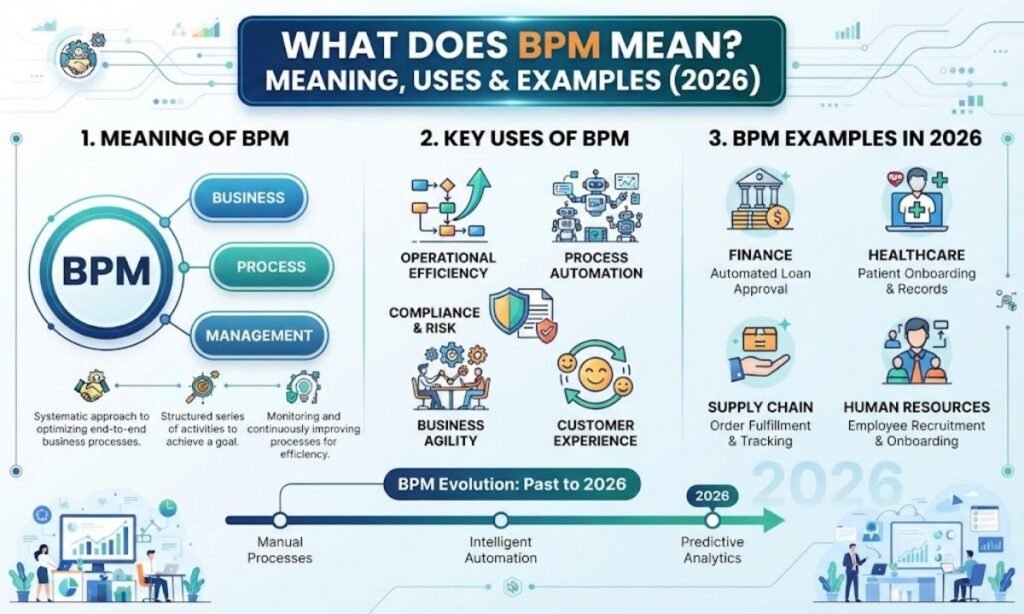
BPM has a few common uses. In music, it shows the tempo, or speed, of a song. In health, it shows your heart rate. In business, it can also mean Business Process Management, which is about improving how work gets done. The setting tells you which meaning to pick.
In this guide, you will learn where BPM came from and how people use it today. You will see real chat examples, easy tables, and simple replies. You will also learn how to avoid common mix ups. Each tip is short, clear, and easy to follow. Let’s get started.
BPM: Quick Meaning
BPM stands for beats per minute. It is a unit that counts how many beats occur in 60 seconds. The higher the number, the faster the pace.
In music, BPM shows the tempo, or speed, of a song. In health, it shows your heart rate, or how many times your heart beats each minute. The same idea works in both places: count the beats, then measure them over one minute.
There is also a business meaning. In the workplace, BPM can stand for Business Process Management, which is about improving how work gets done. Context tells you which one is meant.
Most Common Definitions
- Beats per minute: the speed of music or a heartbeat.
- Business Process Management: a method to improve workflows.
- Slang use: a casual way to describe energy, such as “my BPM is high today.”
Simple Definition
BPM is a speed counter. It tells you how fast something pulses, whether it is a drum, a heart, or a rhythm.
Example Quotes
- “This song is 120 BPM, so it is perfect for walking.”
- “My resting BPM is 68 today.”
- “The DJ matched both tracks at 128 BPM.”
- “Our team uses BPM software to track tasks.”
Quick Reference Table
| Feature | Details |
| Term | BPM |
| Most common meaning | Beats per minute |
| Other meaning | Business Process Management |
| Used in | Music, health, fitness, business, gaming |
| Measures | Speed of beats or pulse |
| Tone | Neutral and technical |
| Typical range (heart) | 60 to 100 BPM at rest for most adults |
Origin & Background
The idea of counting beats is very old. Musicians have always needed a way to keep time together. Over the years, the way people measure and share tempo has changed a lot.
BPM grew from music, moved into medicine, and then spread online and into business. Each field borrowed the same simple idea: count beats in a minute.
Musical Roots
In music, tempo was once described with words like “slow” or “fast.” In the early 1800s, the metronome gave musicians a steady click they could set to a number. That number became the BPM we know today.
Composers began writing numbers on sheet music. A piece marked 60 BPM has one beat each second. A piece marked 120 BPM has two beats each second.
Medical Adoption
Doctors have long used the pulse to check health. Counting heartbeats for one minute gave a clear number. Over time, “beats per minute” became the standard way to report heart rate.
Today, hospitals, clinics, and wearable devices all use BPM. It helps people track fitness, stress, and general wellness.
Digital & Internet Expansion
Music software, streaming apps, and fitness watches brought BPM to everyday users. You can now search playlists by BPM or see your pulse on your wrist. Social media creators also share BPM in workout and dance videos.
Business & Corporate Use
In offices, BPM can mean Business Process Management. Companies use it to map, track, and improve tasks. It is common in operations, finance, and IT teams.
Timeline Table
| Stage | What Happened |
| Early music | Tempo was described with words |
| 1800s | The metronome made tempo measurable |
| Medical growth | Heart rate reported as beats per minute |
| Digital era | Apps and watches showed BPM instantly |
| Today | Used in music, health, fitness, and business |
Real-Life Conversations
Seeing a term in real chats makes it easier to understand. Below are four short examples that show BPM in daily talk.
WhatsApp Chat
Rina: What is a good song for my morning run?
Sam: Try something around 150 BPM.
Rina: Nice, that should keep me moving.
Sam: Yes, the beat will help your pace.
Here, BPM refers to music tempo.
Instagram DM
Ella: My watch says my BPM is 110 right now.
Noah: Did you just climb the stairs?
Ella: Yes, ten floors.
Noah: That makes sense. Rest a minute.
In this chat, BPM means heart rate.
TikTok Comments
User 1: What BPM is this beat?
User 2: About 90 BPM. Great for slow dance edits.
User 1: Thanks, I will use it.
Short comments like this are common in music and dance videos.
Text Messages
Alex: Did you finish the BPM report?
Jo: Yes, I mapped all the approval steps.
Alex: Great, send it over.
Here, BPM means Business Process Management.
Emotional & Psychological Meaning
BPM is a number, but it often connects to feelings. A fast beat can lift your mood. A slow beat can calm your mind. A racing pulse can show excitement or stress.
People enjoy BPM because it makes invisible feelings easy to measure. It turns rhythm and emotion into something you can see and compare.
Music & Mood Connection
Different tempos create different moods. Many people feel energized by fast songs and relaxed by slow ones. That is why playlists are often sorted by BPM.
- 60 to 80 BPM: calm, soft, and relaxing.
- 90 to 120 BPM: steady, happy, and easy to move to.
- 130 to 160 BPM: high energy and strong motivation.
Heartbeat & Emotion
Your heart speeds up when you feel excited, nervous, or afraid. It slows down when you feel calm and safe. Watching your BPM can help you notice how your body reacts.
This does not replace medical advice. If you worry about your heart rate, talk to a doctor.
Psychological Identity
Some people link BPM to their identity. A runner may feel proud of a low resting BPM. A DJ may see a favorite tempo as part of their style. In this way, BPM becomes a small personal signature.
Mood Table
| BPM Range | Common Feeling | Best For |
| 60 to 80 | Calm | Rest, study, meditation |
| 90 to 120 | Happy and steady | Walking, cooking, driving |
| 120 to 140 | Energetic | Dance, party, light workout |
| 140 to 180 | Intense | Running, gym, fast sports |
Usage in Different Contexts
BPM changes slightly based on where you use it. The setting tells you which meaning to pick.
Social Media
On social media, BPM appears in music clips, workout videos, and fitness posts. Creators write “128 BPM” so others can find matching tracks. Some people also post screenshots of their heart rate after a big workout.
Friends & Relationships
Among friends, BPM is easy and fun. People share playlists, compare step goals, and joke about racing hearts. In romance, someone may say “my BPM went up when I saw you.” It is a sweet and playful way to talk about feelings.
Work & Professional Settings
At work, BPM often means Business Process Management. Teams use it to improve steps, cut delays, and track results. In health or fitness jobs, BPM means heart rate and is used with care and accuracy.
Casual vs Serious Tone
In casual talk, BPM can be playful, like “my BPM is off the charts.” In serious settings, such as medicine or business, it is exact and technical. Always match your tone to your audience.
Context Table
| Setting | Typical Meaning | Tone |
| Social media | Music tempo or heart rate | Light |
| Friends | Playlists, fitness, jokes | Friendly |
| Relationships | Heart racing, feelings | Sweet |
| Work (office) | Business Process Management | Professional |
| Healthcare | Heart rate | Serious and exact |
Common Misunderstandings
BPM is simple, but people sometimes mix it up. Here are the most common mistakes.
Thinking BPM Only Means Music
Many people link BPM only to songs. In truth, it also measures heart rate. It can even mean Business Process Management at work.
Confusing High BPM as Always Bad
A high BPM is not always a problem. Your heart rate rises during exercise, laughter, or excitement. That is normal. A constantly high resting BPM, though, may need a doctor’s check.
Assuming All Songs Need High BPM
Some think a good song must be fast. That is not true. Slow songs can be powerful and moving. The best BPM depends on the mood and purpose.
Using BPM in Wrong Context
Saying “my BPM is 120” in a business meeting may confuse people. Make it clear whether you mean heart rate, music tempo, or process management.
Comparison Table
BPM is often compared with similar terms. This table shows the difference.
| Term | Meaning | Example |
| BPM (music) | Beats per minute of a song | “This track is 120 BPM.” |
| BPM (heart) | Heartbeats per minute | “My pulse is 72 BPM.” |
| BPM (business) | Business Process Management | “We use BPM tools.” |
| Tempo | Speed of music | “The tempo is fast.” |
| Pulse | Heartbeat felt in the body | “I checked my pulse.” |
| RPM | Rotations per minute | “The engine runs at 3000 RPM.” |
| Cadence | Steps or beats per minute in running | “My cadence is 170.” |
BPM and RPM look alike, but they count different things. BPM counts beats, while RPM counts full turns.
Variations / Types of BPM
BPM changes based on the activity. Here are ten common types.
Resting BPM
Your heart rate when you are calm and still. Many adults fall between 60 and 100 BPM.
Active BPM
Your heart rate during movement or exercise. It rises as your body needs more oxygen.
Target BPM
The heart rate range you aim for during a workout. It helps you train safely and well.
Song BPM
The tempo of a track. Pop songs often sit around 100 to 130 BPM.
Dance BPM
The speed of music made for dancing. House music often runs near 120 to 130 BPM.
DJ Transition BPM
The matching tempo DJs use to blend two songs. Close BPM values make smooth mixes.
Meditation BPM
Slow rhythms, often around 60 BPM or less, that help people relax and breathe deeply.
Running BPM
Music or heart rate during a run. Many runners like songs between 140 and 170 BPM.
Business BPM
Short for Business Process Management. It focuses on improving workflows, not beats.
Gaming BPM
The tempo of rhythm games or game music. It affects timing, challenge, and mood.
Variations Summary Table
| Type | What It Measures | Example Range or Use |
| Resting BPM | Calm heart rate | 60 to 100 |
| Active BPM | Heart rate in motion | Varies by effort |
| Target BPM | Workout goal zone | Set by age and fitness |
| Song BPM | Music tempo | 60 to 180 |
| Dance BPM | Dance track speed | 120 to 130 |
| DJ transition BPM | Matched tempo | Within a few BPM |
| Meditation BPM | Calm rhythm | Around 60 or lower |
| Running BPM | Pace music or pulse | 140 to 170 |
| Business BPM | Process improvement | Not a number |
| Gaming BPM | Rhythm game speed | Varies by game |
How to Respond When Someone Uses “BPM”
Your reply depends on the setting and the person. Here are easy options for each mood.
Casual Replies
- “Nice, that is a good tempo.”
- “Send me the playlist.”
- “That sounds like a solid workout.”
Funny Replies
- “My BPM goes up when the pizza arrives.”
- “I only run when the beat is above 150.”
- “My heart rate just hit 130 reading that.”
Mature / Confident Replies
- “Good point. The right tempo can improve focus.”
- “Thanks for sharing. Let’s track it over time.”
- “That is a helpful number. What is your goal?”
Private / Respectful Replies
- “Thanks for telling me. I hope you feel okay.”
- “If your heart rate worries you, a doctor can help.”
- “I’m here if you want to talk.”
Reply Guide Table
| Situation | Best Reply Style |
| Music or playlist chat | Casual and friendly |
| Joking with friends | Funny |
| Work or planning talk | Mature and confident |
| Health concern | Private and respectful |
Regional & Cultural Usage
BPM is understood almost everywhere because music and health use the same system. Still, the way people talk about it can differ.
Western Culture
In the United States, the United Kingdom, Canada, and Australia, BPM is common in fitness, music, and tech. People use it in gyms, clubs, and workplaces. Smartwatches have made it part of daily life.
Asian Culture
In many parts of Asia, BPM is widely known through K-pop, anime music, fitness apps, and rhythm games. Students also learn it in music and science classes. Business teams use the term in operations and IT.
Middle Eastern Culture
In the Middle East, BPM is familiar in healthcare, fitness, and music production. Young people learn it through streaming and social media. In business, Business Process Management is a growing field.
Global Internet Usage
Online, BPM travels fast through playlists, workout videos, and health apps. It is easy to understand across languages because it relies on numbers. A short note on which meaning you use can still help.
Regional Usage Table
| Region | Level of Use | Notes |
| Western countries | High | Fitness, music, and office use |
| Asia | High | Music, gaming, and school learning |
| Middle East | Medium to high | Health, music, and business |
| Global internet | High | Playlists, fitness, and apps |
Frequently Asked Questions
What does BPM mean?
BPM means “beats per minute.” It measures the speed of music or your heart rate.
What does BPM mean in music?
In music, BPM shows tempo. A higher number means a faster song.
What is a normal BPM for the heart?
Most adults have a resting heart rate between 60 and 100 BPM. Fit people may have a lower number.
What does BPM mean in business?
In business, BPM means Business Process Management. It helps teams improve how work is done.
What BPM is best for running?
Many runners like songs between 140 and 170 BPM. Pick a pace that feels natural for you.
Is a high BPM bad?
Not always. Your BPM rises during exercise or excitement. See a doctor if your resting rate stays high.
How do you measure BPM?
Count the beats for 15 seconds and multiply by four. You can also use a smartwatch or a music app.
Final Thoughts
BPM is a short and useful term that means “beats per minute.” It measures the speed of a song, the pulse of your heart, and, in business, it can mean Business Process Management. Once you know the context, the meaning becomes clear in seconds.
Use BPM to pick the right music, track your fitness, or improve your workflow. Always state which meaning you use so others do not get confused. If your heart rate ever worries you, speak with a healthcare professional for safe and proper guidance.

Muhammad Shoaib is a content creator and SEO professional who enjoys making language and vocabulary easy to understand. He writes helpful content about word meanings, phrases, slang, abbreviations, spelling differences, and everyday expressions. nThrough WhizzMean, Shoaib focuses on creating clear, simple, and practical explanations that help readers quickly understand confusing words and language-related questions.