Monogamy means having one partner at a time. It is the most common relationship model in many cultures. Still, the word carries more than one layer. It can describe love, marriage, biology, and even animal behavior.
This guide explains the monogamy meaning in plain words. You will learn where the word comes from, the main types, the benefits, the challenges, and how it differs from other relationship styles.
What Is the Meaning of Monogamy?
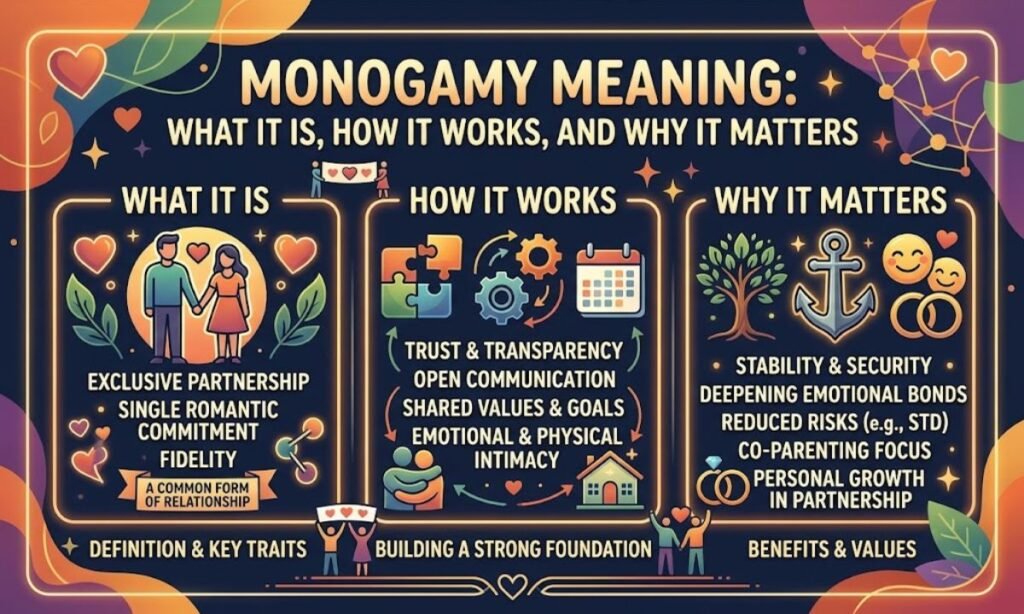
Monogamy is a relationship style where a person has one romantic or sexual partner at a time. The two people agree to be exclusive. They do not seek romantic or sexual connection with others.
Most people think of marriage or a committed relationship. That is the common use. But monogamy does not always need a wedding. Two people can be monogamous while dating, living together, or married.
The core idea is simple. It is about exclusivity and a shared promise.
- One partner at a time
- Mutual agreement to stay exclusive
- Emotional and physical commitment
- Trust as the base of the bond
Where Does the Word Monogamy Come From?
The word comes from Greek. “Monos” means one or single. “Gamos” means marriage. Put together, the word literally means “one marriage.”
The word entered English in the 1600s. At first, it was mainly about marriage rules. Over time, the meaning grew. Today it also covers dating, partnership, and animal mating patterns.
The opposite word is polygamy, which means having more than one spouse. You will also see “non-monogamy,” a wider term for any relationship with more than one partner by agreement.
Main Types of Monogamy
Not every monogamous relationship looks the same. Experts describe several types. Knowing them helps you understand what people mean when they use the word.
| Type | Meaning | Simple Example |
| Social monogamy | Two partners live together, share tasks, and raise children | A married couple with kids |
| Sexual monogamy | Two partners are intimate only with each other | A committed couple who agree to exclusivity |
| Genetic monogamy | Both partners have offspring only with each other | Seen in some animal species |
| Serial monogamy | One partner at a time, but several partners over a lifetime | Someone who has three long relationships in ten years |
| Emotional monogamy | Deep emotional bonds are kept only with one partner | Partners who share their inner world mainly with each other |
Serial monogamy is very common today. People may have more than one partner across their life. But they are faithful to one at a time.
Monogamy in Humans and Animals
Many people ask if humans are naturally monogamous. The honest answer is that science does not give one simple answer. Human history shows many types of family systems. Some cultures allowed multiple spouses. Others did not.
Animals show the same variety. Only a small share of mammals form pair bonds. Birds do it far more often. Many bird species form pairs, and some pairs stay together for years. Swans and many penguin species are popular examples.
Even in the animal world, things are not always as they seem. Researchers found that many “pair bonded” birds still have offspring with others. This is why scientists separate social monogamy from genetic monogamy.
Prairie voles, gibbons, and beavers are often named as pair bonding mammals. Humans seem to fall somewhere in the middle. We form deep pair bonds, but our culture shapes how we express them.
Signs of a Monogamous Relationship
How do you know if a relationship is truly monogamous? The best signs come from clear talk, not guesses. Many couples never say the rules out loud. That leads to confusion later.
A healthy monogamous bond usually has a few clear features. Both partners know the rules. Both agree to them. And both feel safe.
- You have talked openly about exclusivity
- Both partners keep promises about loyalty
- You make big life choices together
- Trust is high and jealousy is manageable
- Both of you feel secure, not controlled
If you are not sure, ask. A simple chat like “Are we exclusive?” can save months of stress.
Benefits of Monogamy
Monogamy works well for many people. It gives a clear structure. You know where you stand, and so does your partner.
Here are the benefits people often report:
- Emotional security: You can rely on one person for deep support.
- Deeper trust: Years of shared history build strong bonds.
- Lower health risk: Fewer partners can lower the risk of sexually transmitted infections.
- Stable family life: Raising children with a steady partner can feel simpler.
- Shared goals: Money, home, and future plans are easier to align.
These benefits are real, but they are not automatic. They grow from effort, honesty, and respect. A monogamous label alone does not create a healthy bond.
Challenges of Monogamy
No relationship style is perfect. Monogamy has its own hard parts. Knowing them early helps you prepare.
One common challenge is unmet needs. One person cannot meet every need all the time. Expecting that can create pressure. Another challenge is the risk of infidelity. Cheating breaks trust and can end the bond.
Boredom can also appear. Long relationships sometimes lose their spark. Couples who plan date nights, try new things, and keep talking tend to handle this better.
Finally, mismatched expectations cause trouble. One partner may want strict exclusivity. The other may see things more loosely. Clear, honest talks solve most of these issues before they grow.
Monogamy vs Non-Monogamy
Monogamy is one model among many. Non-monogamy is a broad term for relationships with more than one partner, with the knowledge and consent of everyone involved. This is not the same as cheating. Cheating means breaking an agreement in secret.
Here is a quick comparison.
| Feature | Monogamy | Consensual Non-Monogamy |
| Number of partners | One at a time | More than one, by agreement |
| Core rule | Exclusivity | Honesty and consent |
| Common forms | Marriage, dating | Open relationships, polyamory, swinging |
| Main challenge | Meeting all needs with one person | Time, jealousy, and communication |
| Key strength | Simplicity and deep focus | Variety and shared connection |
Neither style is better for everyone. The best choice is the one that fits the values of the people involved.
Monogamy vs Polygamy: A Common Mix-Up
Many readers search for “monogamy vs polygamy.” The two words sound alike but mean different things. Monogamy is one spouse or partner. Polygamy is having more than one spouse at the same time.
Polygamy has two main forms. Polygyny is one man with several wives. Polyandry is one woman with several husbands. Both are rare today. Laws about them differ from country to country.
Polygamy is mostly about marriage rules. Non-monogamy is about relationships in general. That is why the terms should not be used as if they were the same.
How to Build a Healthy Monogamous Relationship
A strong monogamous bond takes daily care. You do not need grand gestures. Small, steady habits matter more.
Try these simple steps:
- Set clear rules together. Talk about what loyalty means to each of you.
- Communicate often. Share worries before they grow.
- Respect boundaries. Each person needs space and privacy.
- Keep the spark alive. Plan time for fun, travel, and new experiences.
- Rebuild trust fast. If a mistake happens, face it honestly and work on repair.
- Seek help when stuck. A couples counselor can guide hard talks.
Remember that commitment is a choice you renew. It is not a one time event.
Frequently Asked Questions
What does monogamy mean in simple words?
Monogamy means being in a romantic relationship with only one person at a time. Both partners agree to stay exclusive.
Is monogamy the same as marriage?
No. Marriage is a legal or religious bond. Monogamy is the choice of exclusivity, and it can exist with or without marriage.
What is serial monogamy?
Serial monogamy means having one partner at a time but several partners over a lifetime. Each relationship ends before the next one starts.
Is monogamy natural for humans?
Experts do not agree on one answer. Humans form pair bonds, yet culture and personal choice shape how people practice monogamy.
What is the difference between monogamy and polygamy?
Monogamy is one partner or spouse. Polygamy is having more than one spouse at the same time.
Can a monogamous relationship fail?
Yes. Poor communication, broken trust, and mismatched needs can end any relationship, monogamous or not.
Is monogamy only about sex?
No. It also includes emotional loyalty, trust, and shared life goals. Sexual exclusivity is only one part.
Final Thoughts
The monogamy meaning is easy to state but rich in detail. At its heart, it is a promise between two people to be exclusive. That promise can look different from one couple to the next. It may involve marriage, long term dating, or a life built together over many years.
What matters most is honesty. Talk about your expectations early and often. Respect your partner’s needs and your own. Whether you choose monogamy or another path, a relationship built on trust, clear talk, and care has the best chance to last.

Muhammad Shoaib is a content creator and SEO professional who enjoys making language and vocabulary easy to understand. He writes helpful content about word meanings, phrases, slang, abbreviations, spelling differences, and everyday expressions. nThrough WhizzMean, Shoaib focuses on creating clear, simple, and practical explanations that help readers quickly understand confusing words and language-related questions.