You have probably seen “NSFW” on a post, a video, or a chat message. It is short, it is common, and it can be confusing if nobody has explained it. The NSFW meaning is simple: “Not Safe For Work.”
It is a warning label. It tells you the content may be unsuitable to view in a public or professional place. In this guide, you will learn what the term means, where it came from, how people use it, and how to stay safe online.
What Does NSFW Mean?
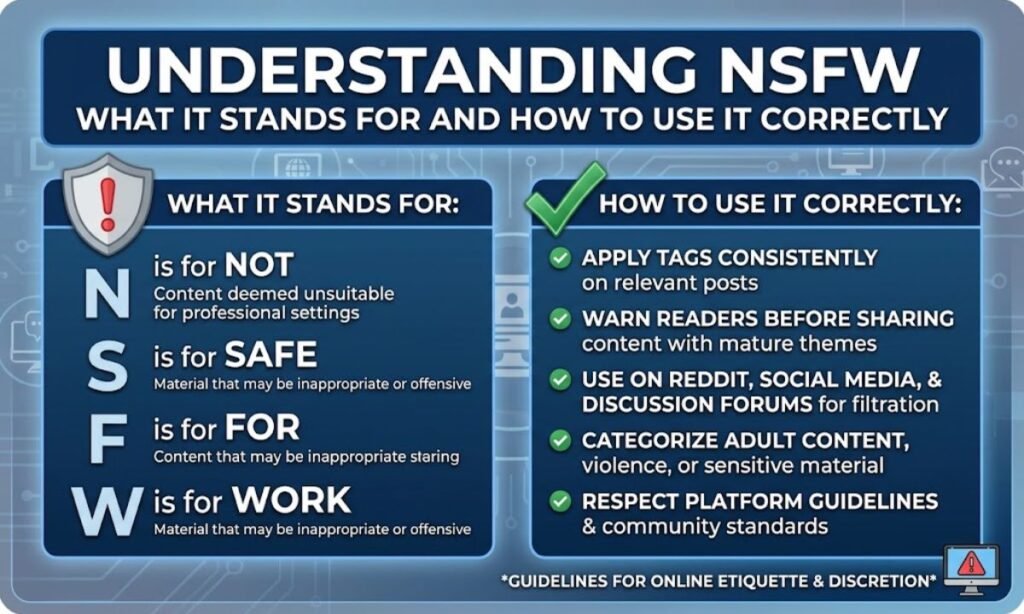
NSFW stands for “Not Safe For Work.” People add it to links, posts, images, videos, and messages. The tag warns you that the content may be inappropriate if someone sees it in a workplace, school, or other shared space.
The label does not describe one single type of content. It is a broad warning. It can point to nudity, sexual themes, graphic violence, strong language, or disturbing scenes.
Think of it like a heads-up from a friend. The creator is saying, “Open this in private, not at your desk.” The tag protects you from awkward moments and possible trouble with your boss or teacher.
Here is a quick summary:
| Item | Details |
| Full form | Not Safe For Work |
| Type | Internet slang and content warning |
| Main purpose | To warn viewers before they open sensitive content |
| Common places | Social media, forums, chat apps, and messaging groups |
| Opposite term | SFW (Safe For Work) |
Where Did the Term NSFW Come From?
The term grew out of early internet culture. Online forums and message boards were popular, and many people browsed them at work. Users began tagging risky links so coworkers would not get caught off guard.
Over time, the tag moved from small forums to large platforms. Social media sites, video platforms, and chat apps all picked it up. Today, almost every active online community knows what it means.
The idea behind it never changed. It is a courtesy. A creator labels the content, and the viewer decides whether to open it.
Many people also use NSFW as a general word now. You might hear someone say a joke is “a bit NSFW.” That means it is crude or adult in tone, even if there is no image or video.
What Type of Content Is Labeled NSFW?
NSFW covers many kinds of material. Not all of it is sexual. The common thread is that it could cause discomfort or problems in a formal setting.
Here are the main categories:
- Adult or sexual content: Nudity, suggestive images, and explicit themes.
- Graphic violence: Blood, injury, fights, or disturbing footage.
- Strong language: Heavy profanity or offensive speech.
- Dark or shocking themes: Content that may upset or distress some viewers.
- Mature humor: Jokes that are crude, edgy, or not suitable for all audiences.
Different people and platforms draw the line in different places. One person may tag a joke as NSFW. Another may not. This is why a clear tag helps. When in doubt, creators should label the content.
NSFW Meaning in Social Media and Text Messages
On social media, NSFW is a quick label. Users type it in captions, titles, or replies. Some platforms have built-in settings that hide sensitive posts behind a blur or a warning screen. You must tap to reveal them.
In text messages and group chats, the tag works the same way. A friend might write “NSFW” before sending a meme or a link. That gives you time to decide whether to open it, especially if you are around other people.
Many apps also let users control what they see. You can often turn on a mature content filter or a sensitive media setting. These tools help you avoid surprises. Parents can use them too.
Platforms also use age gates. Some adult spaces require users to confirm they are 18 or older. This protects younger users and helps platforms follow their own safety rules.
NSFW vs SFW vs NSFL: What Is the Difference?
You will often see these terms together. Each one has a clear job.
| Term | Full Form | Meaning |
| SFW | Safe For Work | Suitable to view anywhere, including work or school |
| NSFW | Not Safe For Work | May be inappropriate in public or professional settings |
| NSFL | Not Safe For Life | Extremely disturbing content that can stay with you after viewing |
SFW is the normal, everyday label. If a post is SFW, you can open it without worry.
NSFL is a stronger warning. It is used for very graphic or traumatic material. Most people prefer to avoid it entirely. If you see this tag, think carefully before you click.
Another label you may see is “18+.” It is similar to NSFW, but it focuses on age. It tells you the content is meant for adults only.
How to Use the NSFW Tag Correctly
Using the tag is easy. The goal is to be honest and clear. Here are some simple steps:
- Add “NSFW” at the start of your title or caption.
- Use the platform’s built-in sensitive content setting if it has one.
- Do not hide the warning in tiny text.
- Label the content even if you are not sure it needs it.
- Follow the rules of the site or community you are posting in.
Do not use the tag to trick people into clicking. Misleading labels hurt trust. Some platforms may remove posts or limit accounts that break their content rules.
Also remember that a tag does not make every kind of content allowed. Platforms have their own policies. Some material is banned no matter how it is labeled.
Is NSFW Content Always Bad?
No. The tag is not a judgment. It only means the content is not suited to every setting. Some NSFW material is simply mature art, dark humor, or news footage that is difficult to watch.
For example, a documentary clip about a war zone may carry a warning because of its graphic scenes. It has real educational value. The label just lets viewers prepare themselves.
Still, adult content needs care. It should be viewed by adults, in private, and in line with local laws and platform rules. Minors should not access it.
Why NSFW Warnings Matter at Work and School
The label exists for a practical reason. Opening the wrong content in a shared space can cause real problems. Employers have rules about acceptable use of work devices. Schools have similar policies.
A single careless click can lead to embarrassment, a formal warning, or worse. Company networks also track activity. Even private browsing at work may not be as private as you think.
Here are smart habits to follow:
- Never open NSFW links on a work computer or school device.
- Lower your screen volume before opening unknown videos.
- Check where a link goes before you click.
- Keep personal browsing on your own phone and your own network.
- Talk to your IT team if you are unsure about a policy.
NSFW Tips for Parents and Online Safety
Children can run into sensitive content more easily than most adults realize. A short video or a shared meme may appear without warning. Parents can lower this risk with a few simple steps.
- Turn on parental controls and safe search on devices and apps.
- Use the sensitive content filters inside social media settings.
- Talk openly with your child about what they see online.
- Teach them what labels like NSFW mean.
- Encourage them to tell you if something upsets them.
Open talks work better than strict bans. Kids who feel safe asking questions are more likely to come to you when something goes wrong.
Frequently Asked Questions
What does NSFW stand for?
NSFW stands for “Not Safe For Work.” It warns that content may be inappropriate in public or professional places.
Is NSFW only about sexual content?
No. It also covers graphic violence, strong language, and disturbing scenes.
What is the opposite of NSFW?
The opposite is SFW, which means “Safe For Work.”
Can I get in trouble for opening NSFW content at work?
Yes. Many workplaces have rules against it, and company networks may track activity.
What does NSFL mean?
NSFL means “Not Safe For Life.” It marks extremely graphic or disturbing material.
Do I need to label my posts as NSFW?
You should if the content is mature or sensitive. Many platforms also require it by their rules.
Is NSFW content legal?
It depends on the content, your location, and the platform. Adult material is usually restricted to adults, and some content is illegal everywhere.
Final Thoughts
The NSFW meaning is easy to remember. It stands for “Not Safe For Work,” and it works as a polite warning. It helps people avoid awkward moments, protects professional spaces, and gives viewers a choice before they click.
Knowing how this tag works also makes you a better online citizen. Use it honestly when you share sensitive content. Respect it when you see it. And if you are a parent, teach your children what it means so they can browse with more confidence and care.

Muhammad Shoaib is a content creator and SEO professional who enjoys making language and vocabulary easy to understand. He writes helpful content about word meanings, phrases, slang, abbreviations, spelling differences, and everyday expressions. nThrough WhizzMean, Shoaib focuses on creating clear, simple, and practical explanations that help readers quickly understand confusing words and language-related questions.