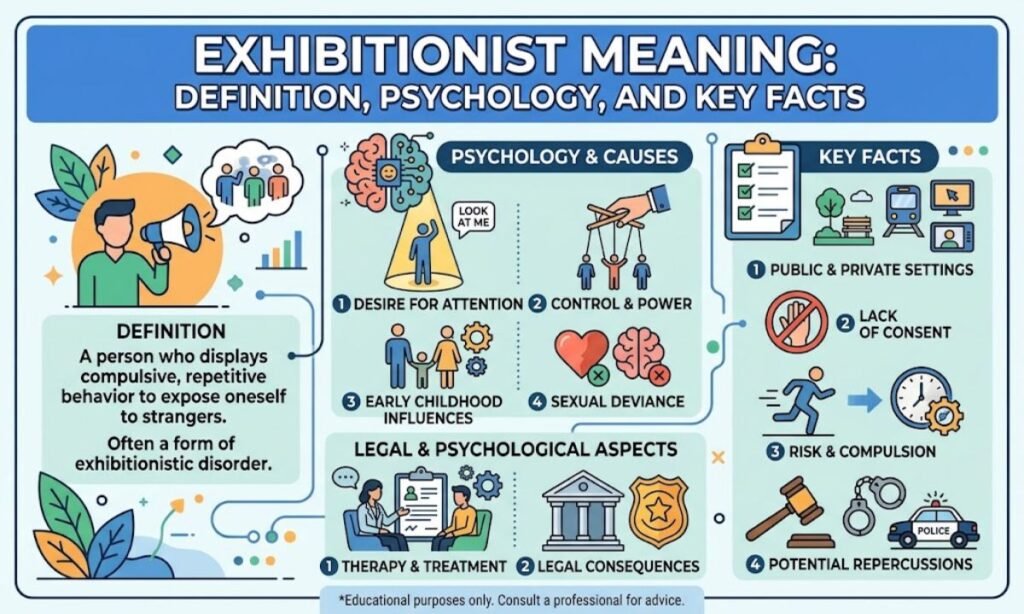
The word “exhibitionist” has two meanings. In daily speech, it describes someone who loves attention and likes to show off. In psychology and law, it describes a person who exposes their private body parts to others in public, usually without consent.
This guide explains both meanings in plain language. You will learn where the word comes from, how professionals define it, how the law treats it, and where people can find help.
What Is the Meaning of Exhibitionist?
An exhibitionist is a person who shows something off to get attention or a reaction. The word can be light or serious, depending on the setting. Context decides everything.
In the clinical sense, an exhibitionist is someone who gets sexual arousal from exposing their genitals to a stranger who did not agree to see it. This is a recognized pattern of behavior, known as exhibitionism. It is not a harmless joke, because the other person is a victim.
Here is a quick summary:
- Casual meaning: a person who loves being the center of attention.
- Clinical meaning: a person with strong urges to expose themselves to unsuspecting people.
- Legal meaning: a person who commits indecent exposure or public lewdness.
Exhibitionist Meaning in Everyday Language
People often use the word loosely. A friend who posts every moment of life online may be called an exhibitionist. So may a performer who loves dramatic stages and bold outfits.
In this sense, the word is mildly negative. It suggests someone who shows off too much. Still, it has nothing to do with sexual behavior.
Be careful with this casual use. Because the word also has a serious clinical meaning, it can confuse or offend people. Words like “show-off,” “attention seeker,” or “extrovert” are clearer and safer choices in most cases.
Exhibitionist Meaning in Psychology
In psychology, exhibitionism is part of a group of conditions called paraphilias. These are intense and unusual sexual interests. The standard guide used by mental health professionals, the DSM-5, calls the diagnosable form “exhibitionistic disorder.”
A person may receive this diagnosis when three things are true:
- They have strong, repeated arousal from exposing themselves to an unsuspecting person.
- The pattern lasts at least six months.
- They have acted on the urges, or the urges cause serious distress or problems in life.
Having a fantasy alone does not always mean a disorder. The diagnosis depends on harm, distress, and whether the person acts without consent. Only a licensed clinician can make this diagnosis.
Research suggests the behavior is reported mostly in men. It often begins in the late teens or early adulthood. Many people who seek help say they feel shame and want the urges to stop.
Origin of the Word Exhibitionist
The word comes from the Latin verb exhibere, which means “to hold out” or “to display.” English also took the word “exhibit” from this root. That is why a museum “exhibit” and an “exhibitionist” share the same ancestor.
The medical term grew popular in the late 1800s. A French doctor named Charles Lasègue is often credited with using it in 1877 to describe people who expose themselves in public. Over time, the word spread into general speech with a wider meaning.
This history explains why the word feels flexible. It started with the simple idea of showing something. Later it took on a narrower and more serious meaning in medicine and law.
Common Signs and Behaviors of Exhibitionism
Exhibitionism has clear features that separate it from simple confidence or boldness. The key difference is the lack of consent. The other person never agreed to see anything.
The table below shows how the clinical pattern differs from everyday attention seeking.
| Feature | Everyday Showing Off | Clinical Exhibitionism |
| Main goal | Get praise or notice | Gain sexual arousal from exposure |
| Consent of viewers | Not an issue | Viewers have not agreed |
| Setting | Social, online, stage | Often public places |
| Legal risk | Usually none | High risk of charges |
| Impact on others | Mild or none | Fear, shock, distress |
Common patterns seen in the clinical form include:
- Strong urges that return again and again.
- Exposure to strangers instead of known partners.
- A wish for a shocked or surprised reaction.
- Feelings of guilt or shame afterward.
Exhibitionism vs. Related Terms
Many people mix up exhibitionism with other words. The differences matter, especially for legal and medical reasons.
| Term | Meaning | Key Difference |
| Exhibitionism | Exposing oneself to unsuspecting people for arousal | Viewer has not consented |
| Voyeurism | Watching others who are unclothed or private | The person watches instead of exposing |
| Nudism or naturism | Living without clothes in agreed settings | Not sexual, and all adults consent |
| Indecent exposure | A legal charge for public exposure | A crime, not a medical term |
| Flashing | Slang for brief exposure | Informal word for the same act |
Nudism is the most common mix-up. Naturists gather in private or approved spaces where everyone knows the rules. Their goal is comfort and a natural lifestyle, not shock or arousal.
What Causes Exhibitionistic Behavior?
Experts do not fully know the cause. No single factor explains it. Most researchers believe several influences combine.
Possible contributing factors include:
- Early learning: how a person’s sexual interests formed in youth.
- Brain and biology: differences in how the brain handles impulse control.
- Mental health issues: anxiety, depression, or personality difficulties.
- Substance use: alcohol and drugs can lower control.
- Social difficulties: trouble forming close relationships.
None of these causes excuses the behavior. Understanding the roots helps with treatment, but each person remains responsible for their actions. Many people with these urges never act on them.
Legal Side of Exhibitionism
Exposing oneself in public without consent is illegal in most countries. Names differ. You may see “indecent exposure,” “public indecency,” or “lewd conduct.” Penalties also differ by country and region.
Possible outcomes can include fines, probation, jail time, and a criminal record. In some places, a conviction can lead to sex offender registration, especially when a child was present. Laws change, so anyone facing a charge should speak with a qualified local lawyer.
Courts also look at intent and context. A person who is sleepwalking, severely ill, or mistaken about privacy may be treated differently from someone who exposes themselves on purpose. Still, the legal system takes the matter seriously because victims often feel frightened.
Treatment and Support Options
Exhibitionistic disorder can be treated. Early help gives better results. Many people improve when they work with a trained mental health professional.
Common approaches include:
- Cognitive behavioral therapy (CBT): helps people notice triggers and change harmful thought patterns.
- Relapse prevention plans: teach practical ways to avoid risky situations.
- Medication: some doctors prescribe antidepressants such as SSRIs to reduce urges.
- Hormone-lowering medicine: used only in severe cases under close medical care.
- Group or individual counseling: reduces shame and builds healthy coping skills.
A person who feels these urges should reach out before anything happens. A psychiatrist, psychologist, or licensed counselor can offer confidential, nonjudgmental care. Asking for help is a sign of responsibility, not weakness.
How to Respond If You Experience Indecent Exposure
If someone exposes themselves to you, your safety comes first. You did nothing wrong. The shock and fear you feel are normal.
Here are practical steps you can take:
- Move to a safe, busy place right away.
- Do not argue with or approach the person.
- Note details such as time, place, clothing, and direction of travel.
- Report the incident to the police or a local helpline.
- Talk to someone you trust, or ask a counselor for support.
Parents should stay calm if a child sees this. Explain that the other person made a bad choice and the child is not in trouble. Encourage the child to tell a trusted adult any time something similar happens.
Exhibitionist Synonyms and Example Sentences
The casual meaning has many close words. Choosing the right one avoids confusion. The clinical meaning has almost no gentle synonyms, so it is best to use the exact term.
Words that match the casual meaning:
- Show-off
- Attention seeker
- Extrovert
- Grandstander
- Limelight lover
Simple examples of casual use:
- “He is a real exhibitionist on stage, and the crowd loves it.”
- “She called herself an exhibitionist because she shares everything online.”
For the clinical meaning, writers usually say “a person with exhibitionistic disorder” or “someone who commits indecent exposure.” These phrases are respectful and accurate.
Frequently Asked Questions
What does exhibitionist mean in simple words?
It means a person who shows off, or in a clinical sense, someone who exposes their body to unsuspecting people for sexual arousal.
Is exhibitionism a mental disorder?
It can be, when urges last six months or more and cause distress or harm. A licensed professional must make the diagnosis.
Is being an exhibitionist illegal?
Having the interest is not a crime. Exposing yourself to people without consent is illegal in most places.
Can exhibitionism be treated?
Yes. Therapy, especially CBT, and sometimes medication can help reduce urges and prevent harm.
What is the difference between an exhibitionist and a voyeur?
An exhibitionist exposes themselves to others. A voyeur secretly watches others who are private or unclothed.
Are all attention seekers exhibitionists?
No. In daily speech the word can describe show-offs, but clinical exhibitionism involves non-consensual sexual exposure.
Where did the word exhibitionist come from?
It comes from the Latin word exhibere, meaning “to display,” and entered medical language in the late 1800s.
Final Thoughts
The meaning of exhibitionist depends on how the word is used. In casual talk, it points to a person who enjoys the spotlight. In psychology and law, it describes a serious pattern of non-consensual exposure that can harm others and bring legal trouble. Knowing both meanings helps you read, write, and speak with more care.
If you or someone you know struggles with these urges, help is available and treatment works. If you were a victim, you are not at fault, and you deserve support. Clear language, empathy, and early action make communities safer and give people a real path toward change.

Muhammad Shoaib is a content creator and SEO professional who enjoys making language and vocabulary easy to understand. He writes helpful content about word meanings, phrases, slang, abbreviations, spelling differences, and everyday expressions. nThrough WhizzMean, Shoaib focuses on creating clear, simple, and practical explanations that help readers quickly understand confusing words and language-related questions.