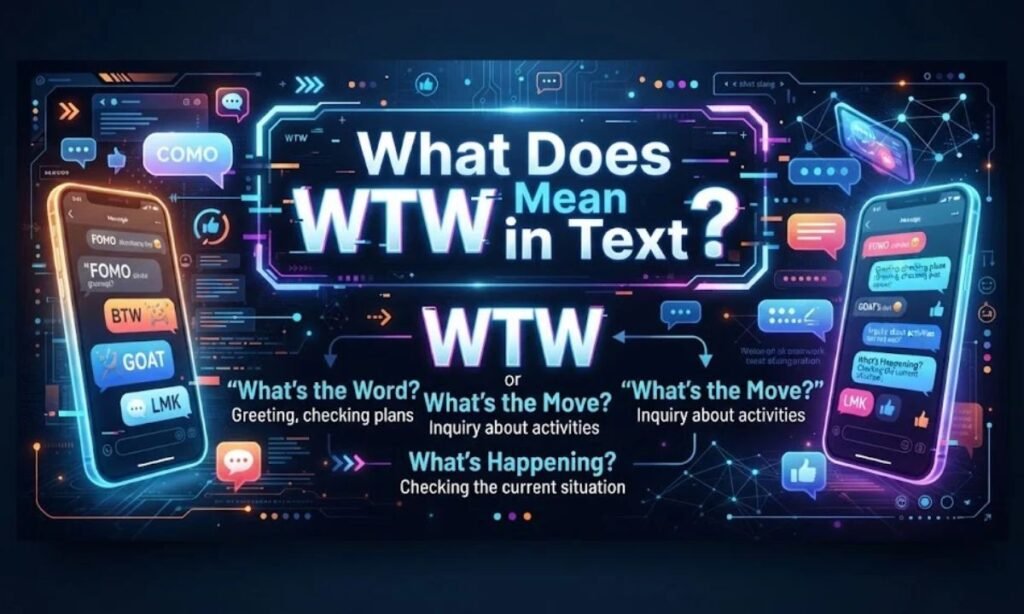
Have you ever got a text that just said “WTW?” It is short, and it comes with no hello. Many people wonder what it means and how to reply.WTW usually means “What’s the word?” It works like “What’s up?” or “What’s going on?” .
People also use it to ask about plans, like “WTW tonight?”This guide explains the meaning in simple words. You will see real chat examples, tone tips, and easy reply ideas. Read on and understand WTW with ease.
What Does WTW Mean in Texting? Quick Meaning
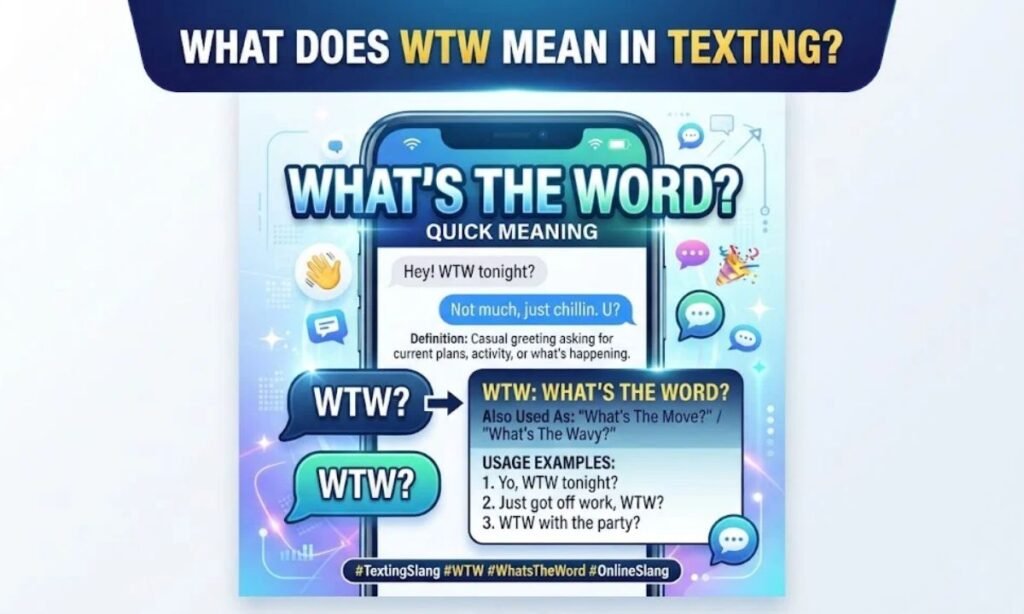
In texting, WTW most often stands for “What’s the word?” It is a casual way to ask what someone is doing, what is new, or what the plan is. Several sources describe it as a greeting or conversation starter, much like “WSP.”
Some users also read it as “What’s the wave?” That version leans toward plans and events. The meaning is close, and the chat context makes it clear.
| Meaning | What the Sender Wants | Example |
| What’s the word? | Updates or a quick catch up | “WTW?” |
| What’s the plan? | Plans for today or tonight | “WTW tonight?” |
| What’s the wave? | The vibe or event coming up | “WTW this weekend?” |
| What’s going on? | A general check in | “Ayo, WTW?” |
Simple Examples
- “WTW? Haven’t heard from you all week.”
- “WTW tonight? Anyone free?”
- “WTW with this trend?”
- “Yo, WTW bro?”
Origin and Background of WTW
The phrase “what’s the word” has been used in spoken English for a long time. People say it to ask for news or updates. It is a friendly way to open a chat.
Texting turned it into a short form. Typing four words took too long, so users cut it down to three letters. The exact first use is hard to trace, but the shortcut spread fast on chat apps and social media.
Today, WTW lives next to other greeting codes like WYD and WSP. It is more open ended than WYD, which only asks what you are doing. WTW can also ask about plans or news.
| Stage | What Happened |
| Spoken English | “What’s the word?” used as a greeting |
| Early texting | Long phrases shortened to save time |
| Chat apps | WTW became a quick check in |
| Social media | Used on Snapchat, TikTok, and Instagram |
Real-Life Conversations: How WTW Is Actually Used
Examples show the meaning better than definitions. Notice how WTW starts a chat or sets a plan.
WhatsApp Conversation
Friend: WTW?
You: Not much, just chilling at home. You?
Friend: Same. Want to grab food later?
Here, WTW works as a friendly hello. It opens the door to plans.
Instagram DM Conversation
Friend: Saw your story. WTW tonight?
You: Thinking of the new cafe downtown. Join?
Friend: Say less. I’m in.
This one is about plans. The sender wants to know if you are free.
Text Message Conversation
Cousin: WTW with the family dinner?
You: Sunday at 7. Mom is cooking.
In this case, WTW means “What’s the plan?” It asks for details.
The Emotional and Psychological Meaning Behind WTW
WTW feels relaxed and open. It does not push for a long answer. The sender is saying, “I’m here, tell me what’s up.”
It also shows interest. A person who texts WTW wants to connect, even if the message is short. That makes it a low pressure way to restart a chat with a friend.
Tone can still shift. A friendly emoji makes it warm. A flat message after a long silence may feel distant. Look at the timing and the relationship.
Watch for these clues:
- Emojis: Smiles and laughs show a warm mood.
- Extra words: “WTW tonight?” signals plans.
- Timing: A late night WTW may mean the sender is bored or free.
- History: Close friends use it more freely than new contacts.
Using WTW in Different Contexts
The meaning stays steady, but the feel changes with the setting.
WTW on Social Media
On Snapchat, TikTok, and Instagram, WTW shows up in DMs, story replies, and comments. Users ask about plans, trends, or general news. It is fast and trendy.
WTW Between Friends
Among friends, WTW is a daily check in. It can start a chat, ask about weekend plans, or invite someone out. Friends often answer with a quick update.
WTW in Relationships and Dating
In dating, WTW can be a light opener. “WTW tonight?” may mean the sender wants to meet. Because the message is vague, it helps to ask for clear plans. Both people should feel comfortable and respected.
WTW at Work or in Professional Settings
Avoid WTW at work. It is slang and may seem too casual. Use “How are you?” or “What is the update?” with colleagues and clients. Note that WTW can also be a company name or a term in unrelated fields, such as water treatment works, so context matters in business chats.
Casual vs. Serious Tone
| Situation | Is WTW Okay? | Better Option |
| Chat with a close friend | Yes | “WTW?” |
| Group chat for plans | Yes | “WTW this weekend?” |
| Message to a new date | Maybe | “What are you up to tonight?” |
| Email to a manager | No | “Could I get an update?” |
| Message to a teacher | No | “Hello, how are you?” |
Common Misunderstandings About WTW
Short slang causes easy mix ups. Here are the common ones.
- WTW is not only “What’s up.” It can also ask about plans or news.
- WTW is not rude. It is a friendly greeting in most chats.
- WTW is not always flirting. Friends use it every day.
- WTW is not the same as WYD. WYD asks what you are doing right now. WTW can ask about plans or updates.
- WTW can have other meanings outside texting. For example, it can stand for a company name or a water treatment works.
When in doubt, ask a quick question. A simple “What do you mean?” clears it up.
WTW Compared With Similar Texting Terms
Many greeting codes sound alike. They differ slightly in tone and focus.
| Term | Full Form | Focus | Tone |
| WTW | What’s the word? | Updates or plans | Casual, open |
| WYD | What you doing? | Current activity | Casual |
| WSP | What’s up? | General greeting | Casual |
| HRU | How are you? | Feelings | Friendly |
| WBU | What about you? | Return question | Friendly |
| WTF | What the f*** | Surprise or anger | Strong |
Key Insight
WTW sits in the middle of the greeting family. It is more open than WYD and more plan focused than WSP. It invites a short update or a plan.
Variations and Related Ways to Use WTW
People tweak WTW to match the situation. Here are common forms.
1. WTW?
The base form. It works as a quick hello and a request for news.
2. WTW Tonight?
Asks about plans for the evening. Expect a reply about food, hangouts, or events.
3. WTW Later?
Asks what is happening later in the day. It keeps plans open.
4. WTW This Weekend?
Asks about weekend plans. Friends use it to coordinate trips and parties.
5. WTW With You?
Asks what is going on with the other person. It sounds caring and curious.
6. WTW With That?
Asks about a situation or object. It can show confusion or interest.
7. So WTW?
A casual way to restart a chat. The word “so” adds a relaxed tone.
8. Ayo, WTW?
A friendly greeting with extra energy. It is common in group chats.
9. WTW Then?
Asks for the next step after a delay. It can sound slightly impatient.
10. WTW Bro?
A buddy style greeting. It is casual and warm among friends.
| Form | Likely Feel |
| WTW? | Neutral, friendly |
| WTW tonight? | Plan check |
| WTW with you? | Caring |
| Ayo, WTW? | Energetic |
| WTW then? | Slightly impatient |
| WTW bro? | Buddy style |
How to Respond When Someone Uses WTW
First, read the context. Is the sender saying hello, or asking about plans? Then match the energy.
Casual Replies
- “Not much, you?”
- “Just chilling. What about you?”
- “All good. What’s up?”
Funny Replies
- “The word is… pizza 🍕”
- “Nothing but vibes and snacks.”
- “The word is nap time.”
Mature and Confident Replies
- “Busy week, but doing well. How about you?”
- “I’m free tonight if you want to meet.”
- “Working on a few things. Want to catch up soon?”
Private or Respectful Replies
If you are not ready to chat or meet, be polite and honest.
- “Hey, thanks for checking in. I’m busy tonight.”
- “I’m taking some time to rest. Talk later?”
- “Not up for plans today, but let’s catch up soon.”
Regional and Cultural Usage of WTW
Slang spreads fast online. Still, comfort levels change from place to place.
Western Culture
In the US, UK, and Canada, WTW often appears in casual youth chats. It is used on Snapchat, TikTok, and Instagram. It feels trendy and friendly.
Asian Culture
In many Asian countries, English slang mixes with local languages. Young users may type WTW in mixed chats. Many keep slang for peers and use polite words with elders.
Middle Eastern Culture
In the Middle East, young users who mix Arabic and English may use WTW with friends. In formal or family settings, people prefer polite greetings. Respect for elders shapes language choices.
Global Internet Usage
Online, WTW is shared slang among gamers, students, and creators. Context keeps the meaning clear across borders.
| Region | Common Use | Tone |
| Western countries | DMs, snaps, group chats | Casual and trendy |
| Asia | Mixed language chats | Casual, careful with elders |
| Middle East | Peer chats | Friendly, respectful |
| Global online | Gaming and social apps | Open and playful |
Frequently Asked Questions
What does WTW mean in text?
WTW usually means “What’s the word?” It asks what’s going on or what the plan is.
Is WTW the same as “What’s up”?
They are close. WTW can also ask about plans or news.
Is WTW rude?
No. It is a friendly, casual greeting in most chats.
Can I use WTW at work?
It is best to avoid it. Use a polite greeting instead.
What is the difference between WTW and WYD?
WYD asks what you are doing now. WTW can ask about updates or plans.
Does WTW ever mean “What’s the wave”?
Yes. Some users read it that way when talking about plans or events.
How do I reply to WTW?
Match the tone. Share a quick update or answer the plan question.
Final Thoughts
WTW is a short and friendly way to say hello. It can open a chat, ask for news, or check on plans. The meaning is simple, but the tone depends on the person and the moment.
Use it with friends and in casual spaces. Skip it at work or with people you do not know well. When you reply, read the context, keep it kind, and answer clearly. That is how you turn three letters into a real conversation.

Muhammad Shoaib is a content creator and SEO professional who enjoys making language and vocabulary easy to understand. He writes helpful content about word meanings, phrases, slang, abbreviations, spelling differences, and everyday expressions. nThrough WhizzMean, Shoaib focuses on creating clear, simple, and practical explanations that help readers quickly understand confusing words and language-related questions.